
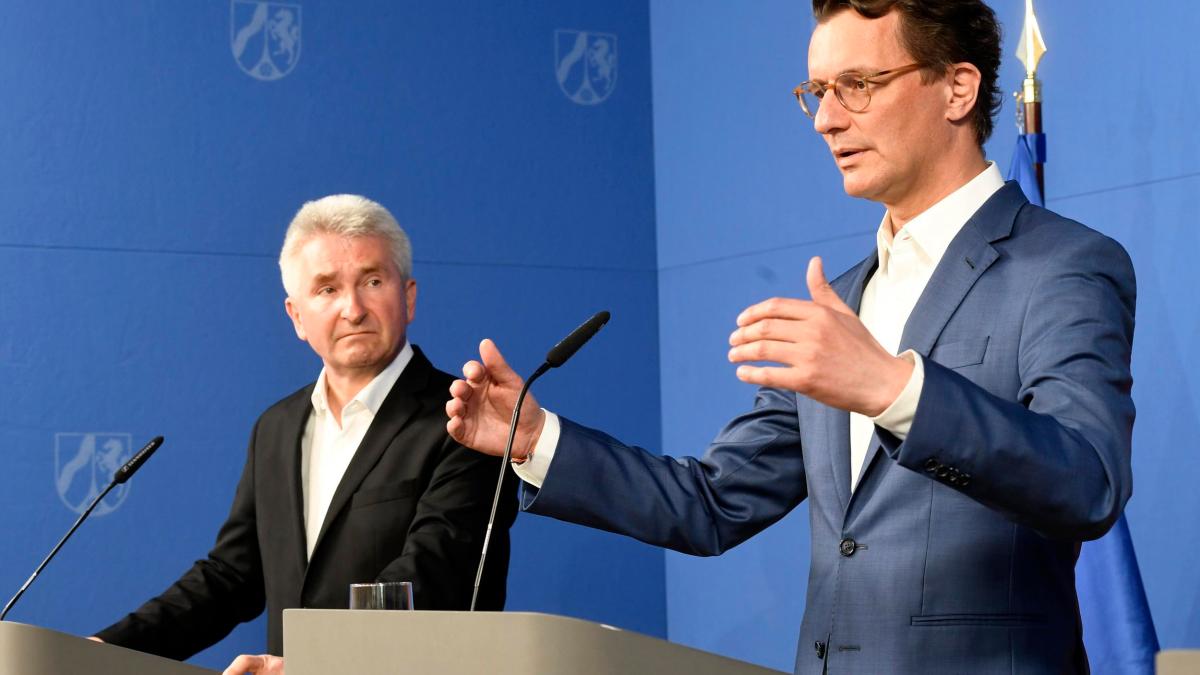
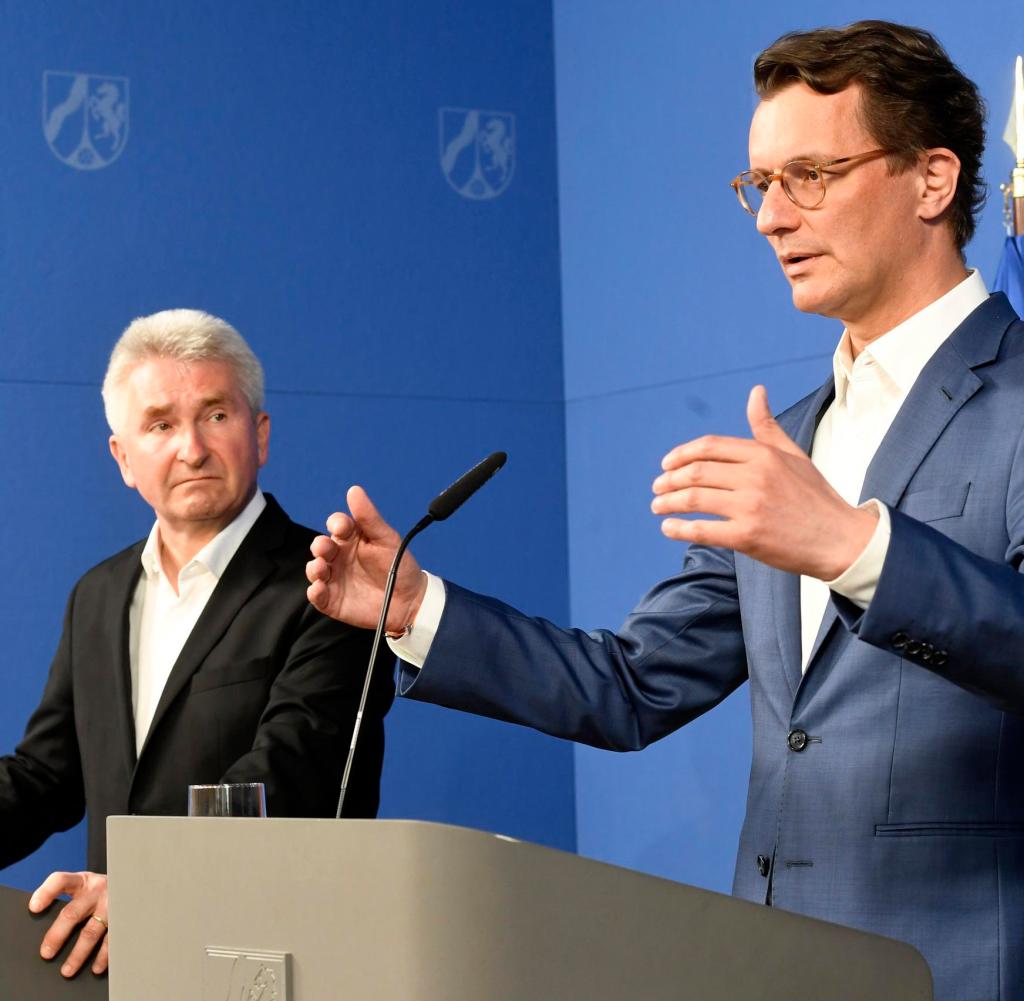
DThe North Rhine-Westphalian state government has presented an energy policy action plan in view of the Ukraine war and a possible Russian gas supply freeze. “As the number 1 energy country, we depend on a secure and affordable energy supply,” said Prime Minister Hendrik Wüst (CDU) on Thursday.
Economics Minister Andreas Pinkwart (FDP) emphasized that gas as a bridging technology has been an important pillar in the planned conversion of the German energy industry towards climate neutrality. But this pillar has cracked as a result of the Ukraine war. “We have to quickly get out of our dependence on Russian natural gas imports.”
The action plan therefore provides, among other things, proposals for the accelerated expansion of renewable energies – such as facilitating the installation of photovoltaic systems on certain agricultural areas. A bundling of approval procedures for wind turbines is also to be examined in order to speed them up. Transport permits for wind turbines should also be issued more quickly.
In addition, the gas infrastructure in NRW must be upgraded in order to be prepared for the expected significant increases in liquid gas transport. The state government will set the course here to carry out the necessary procedures as quickly as possible.
Wüst stuck to the goal of phasing out coal-fired power generation by 2030, but at the same time called for more legal leeway from the federal government for the near future when using coal-fired power plants. After all, coal-fired power plants with a capacity of almost 4 gigawatts are to be shut down this year alone, which could lead to greater use of the existing gas-fired power plants.
According to the action plan, the lignite and hard coal power plants that are about to be shut down are obviously necessary to continue operating temporarily. If this is not possible for reasons of competition law, the capacities must at least be held in reserve. According to the state government, the possibility of reactivating plants that have already been shut down should also be considered in order to save gas.
The action plan met with massive criticism from the SPD. “In the case of black and yellow, there is a wide gap between the promises and the reality of energy policy,” said André Stinka, deputy chairman of the SPD parliamentary group in the North Rhine-Westphalia state parliament. The state government is talking about an independent energy supply and the expansion of renewable energies. But after five years under black and yellow, the country is in a bad position when it comes to expanding renewable energies. Nevertheless, black and yellow “still do not initiate the necessary measures to make NRW a climate-neutral energy state”.
The energy policy spokeswoman for the Greens in the North Rhine-Westphalia state parliament, Wibke Brems, accused the state government of “more appearances than reality” as their leitmotif in the energy transition. “Today at the latest would have been the day to abolish the general minimum distance of 1000 meters for wind turbines and to allow wind on spruce fields,” she said. But during the election campaign, the state government is reluctant to make decisions that are necessary for the future of the country but may be unpopular with some.