
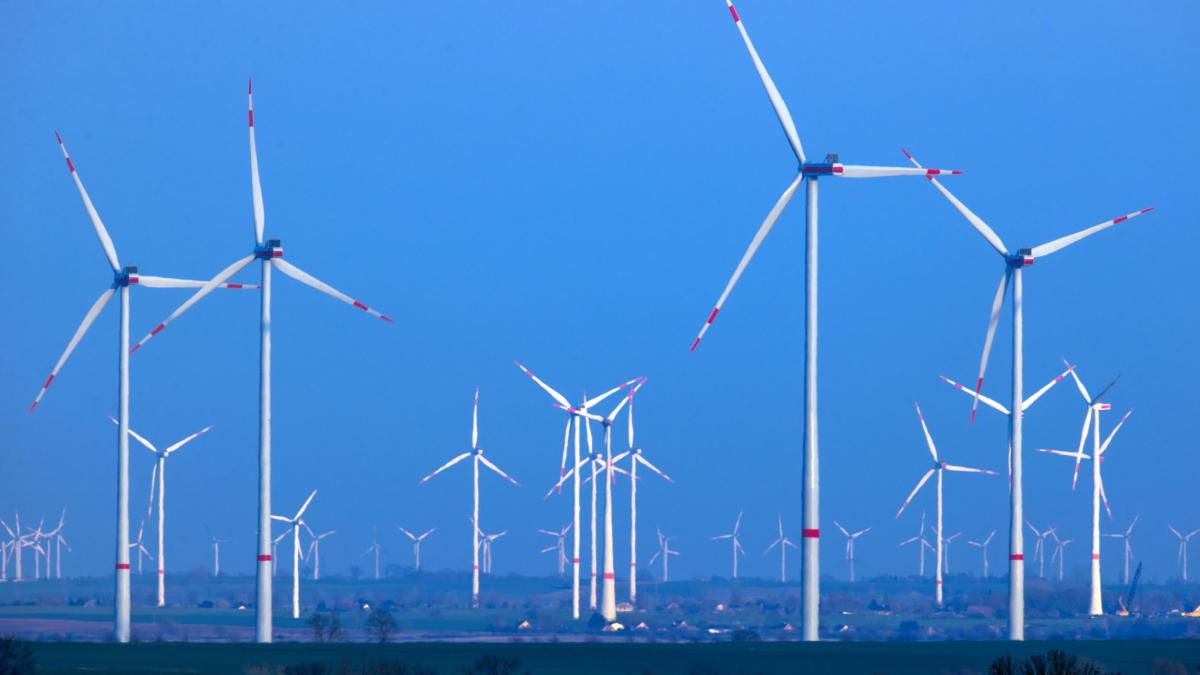
Dhe energy transition is leading to an increasing demand for electricity, which is why the federal government wants to significantly expand renewable energy sources.
But if nature doesn’t play along, the calculation may not add up: According to industry information, green electricity from wind, sun and other renewable energy sources covered 43 percent of gross electricity consumption in Germany in the first half of the year – and thus less than in the same period last year.
The first quarter in particular was unusually windless and there were few hours of sunshine. Generation from wind energy on land and at sea fell by around 20 percent, according to preliminary calculations by the Center for Solar Energy and Hydrogen Research Baden-Württemberg (ZSW) and des Federal Association of Energy and Water Management (BDEW) show.

In the same period of the previous year, the share of renewable energies in gross electricity consumption was around 50 percent. In the first half of 2020 there were records in electricity generation from solar energy and wind energy on land.
The conversion must be faster
The expansion of renewable energies is considered crucial so that the higher climate targets set by politicians can be achieved. Kerstin Andreae, Chairwoman of the BDEW Executive Board, demanded that the pace be increased significantly. “For the higher CO2– Savings target requires a share of at least 70 percent of renewable energies in electricity generation by 2030.”
The previous goal of the federal government is a share of 65 percent. The course must now be set promptly, says Frithjof Staiß, Managing Director of the ZSW. He referred to planning processes and investment decisions.