
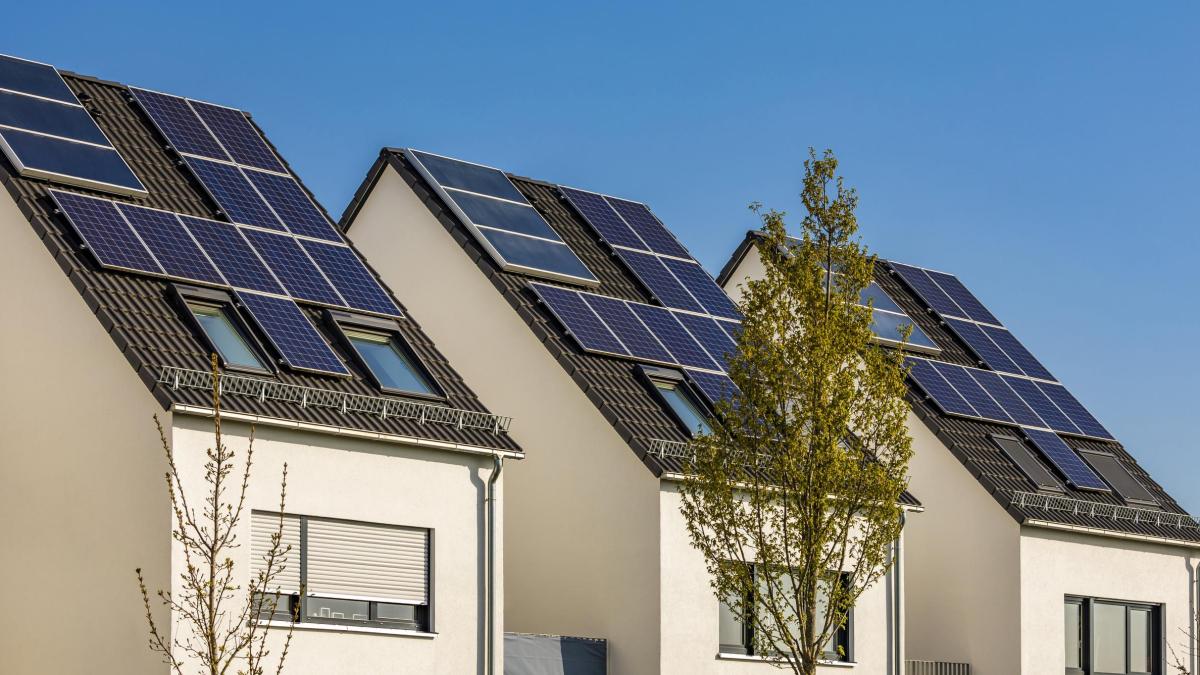
SThe demand for solar power storage in Germany has skyrocketed over the past year. More and more roofs are being equipped with photovoltaic systems – not only in this country. According to the proposal of an international team of experts, an annual increase in capacity of around 25 percent should be aimed at in order to achieve an installed capacity of 75 terawatts (TW) by 2050. This goal is ambitious but certainly achievable, according to the contribution of the more than 50 scientists in the journal “Science”. The growth potential of photovoltaics (PV) has consistently been underestimated in the past.
Over the past 50 years, production has doubled annually from a very low baseline and cumulative capacity has doubled every three years, explain the experts led by Andreas Bett, Director of the Fraunhofer Institute for Solar Energy Systems (ISE), and Nancy Haegel from the National Renewable Energy Laboratory (NREL) in Golden, Colorado. The manufacturing costs of the PV systems would have fallen by about a quarter with every doubling of the total production.
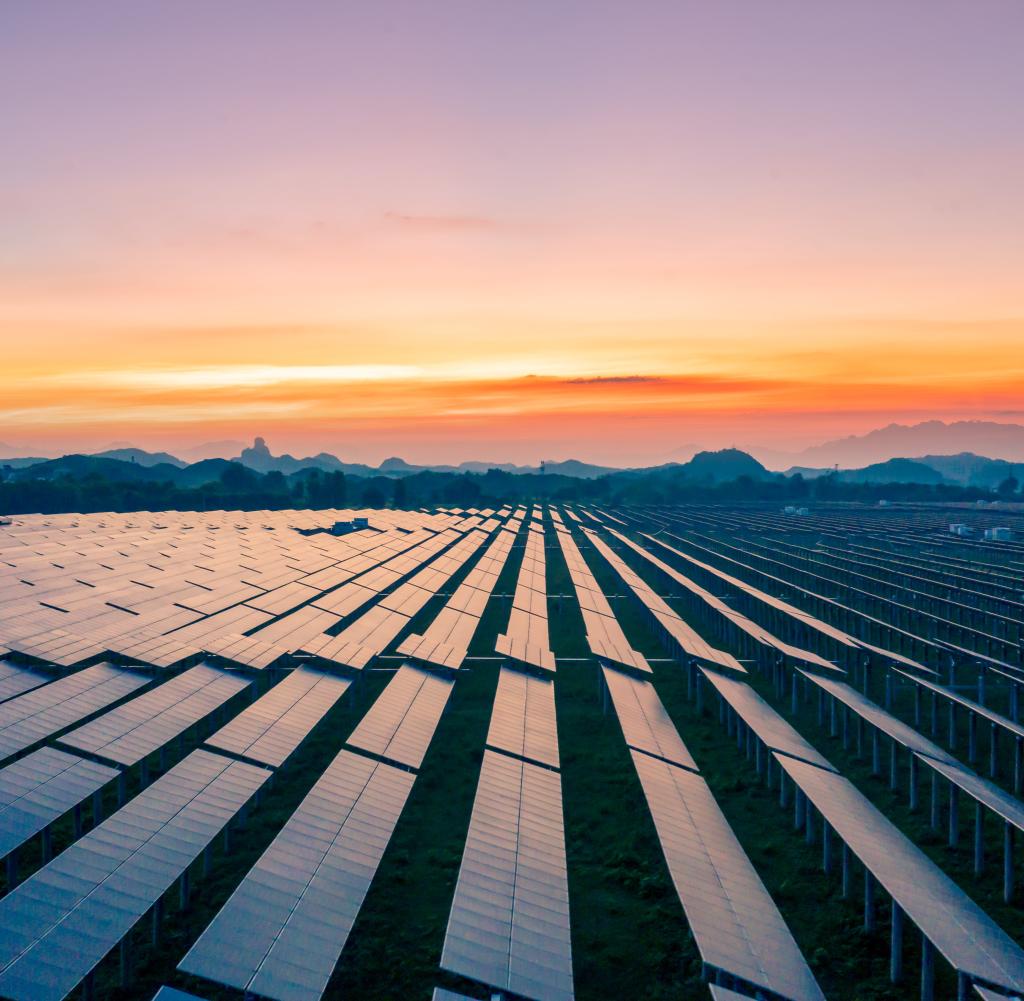
An important milestone was reached in 2022 with a worldwide installed capacity of more than one terawatt. However, at four to five percent in 2022, PV will currently only account for a small part of electricity generation. The technology offers one of the few options that can be implemented quickly and cost-effectively in the fight against the climate crisis.
There is a lack of ongoing re-evaluation
The panel of experts sees the danger that the potential of photovoltaics could be underestimated and consequently underused. Experts from institutes, companies and the EU Commission are convinced that PV is a key element in moving away from fossil fuels on a large scale. In addition to the ISE, researchers from Germany from the Research Center Jülich and the Helmholtz Center Berlin as well as the universities in Freiburg and Marburg were also involved.
When making plans for the future, decision-makers often fail to recognize the rapid rate of growth and change in the PV sector, according to “Science”. There is a lack of continuous reassessment of the potential. According to the experts, it is also underestimated how much the costs of PV technology will fall – while falling costs and rapid growth are assumed for other options such as CO₂ capture and storage, although their implementation has not even started.
This distorted view is questionable insofar as plans for 2025 or 2035 not only indicate the way to 2050, but also limit future options far beyond that. The experts therefore consider it important to focus directly on a target such as 75 terawatts of installed PV capacity. For the PV total, the team totaled inventory and estimated new installations, and subtracted the capacity of systems installed at least 25 years ago—such an uptime is often assumed.
In order to achieve this goal, the high PV growth rates of the past decades would have to be continued, according to the authors. Strategies to compensate for the fluctuations in solar radiation would have to be developed – such as a combination with wind power. Significant challenges in development and production have to be overcome.
According to experts, production must be decentralized
But that is doable; in recent years, technological improvements and fundamental advances in materials chemistry have rapidly found their way from the laboratory to mass production. According to the latest analyses, it will now only be three years before the average cell efficiency in mass production reaches that of a new record holder from the laboratory.
In order for PV to be and remain sustainable, certain raw materials – such as silver consumption – must be readjusted, the team of experts also points out. Today’s silver consumption is already ten percent of global production. PV manufacturers would also have to continuously work on their energy and water consumption and the CO₂ emissions they cause. Sustainable design and recycling are important issues.
Decentralization of production is also necessary. On the one hand, to limit logistics costs and the associated emissions, on the other hand, because if there is too much concentration in a single country, the risk of restrictions and disruptions is too high.
According to “Science”, the procedure in the next few years will be decisive. Photovoltaics offer enormous potential, but need continuous political support; for example, to give companies market security. The course for future developments in the energy sector is now being set. It is therefore very important to make it clear to decision-makers: “Waiting is not an option.”
In Germany, in November 2022, 2.5 million photovoltaic systems with a total nominal output of 63.7 gigawatts were installed on roofs and properties, like this Federal Statistical Office (Destatis) announced in March. Accordingly, the number of systems increased by 14 percent compared to November 2021, and the installed capacity by 13 percent.
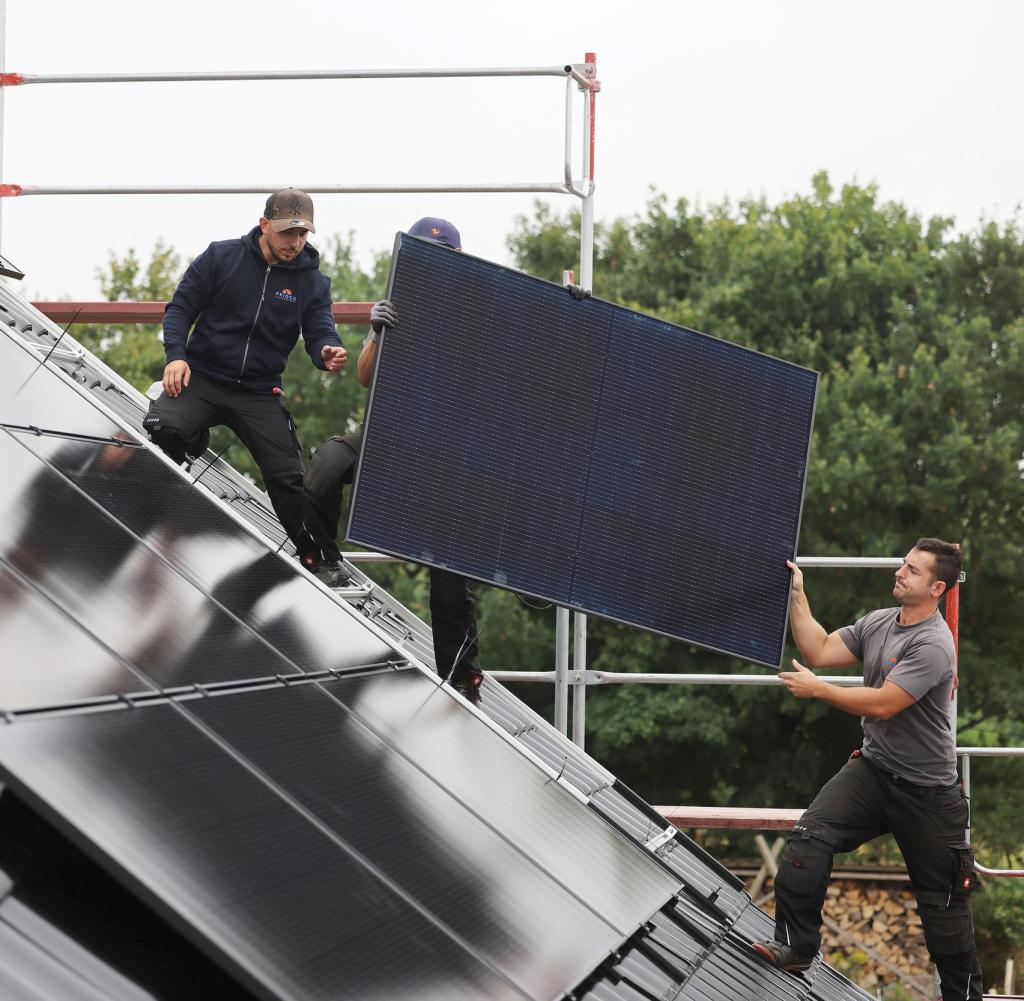
The share of photovoltaics in total electricity generation also increased: According to Destatis, it reached a new high with almost twelve percent of the electricity fed into the grid from January to November 2022. From January to November 2021 it was a good nine percent. The previous record month for solar power in Germany was June 2022 with a good 7.6 terawatt hours and a 20 percent share of total power generation.
According to the Destatis data, around 87 percent of the photovoltaic systems imported in 2022 came from China. In Germany, the production of solar modules for photovoltaic systems in particular has increased significantly in recent years. From January to September 2022, around 2.9 million solar modules were produced for sale in Germany and abroad – 44 percent more than in the first three quarters of 2021.
“Aha! Ten minutes of everyday knowledge” is WELT’s knowledge podcast. Every Tuesday and Thursday we answer everyday questions from the field of science. Subscribe to the podcast at Spotify, Apple Podcasts, deezer, Amazon Music or directly via RSS feed.