
Swedish thin-film solar solutions company, Midsummer, was recently selected to participate in a research project to develop a highly efficient and stable Si/CIGS tandem solar cell that is expected to achieve over 30% efficiency.
The project is secured Financing of AUD 3.08 million (USD 2.07 million) from the Australian Renewable Energy Agency (ARENA) with a total project budget of AUD 11.55 million (USD 7.78 million).
The University of New South Wales (UNSW) will lead the project. Other participants include some of the world’s leading manufacturers of solar modules. Xiaojing Hao, professor at the UNSW School of Photovoltaic and Renewable Energy Engineering commented:
We recognize ARENA’s strong support. By working closely with our project partners, world-leading chalcogenide and Si-PV researchers and manufacturers, this project will provide high-performance, long-life and low-cost next-generation tandem cells that can be rapidly scaled.
Midsummer CEO Sven Lindstrom said that silicon and thin film are two mature, stable and proven technologies in the current solar space. Their combination to form tandem cells offers the best conditions for rapid commercialization.

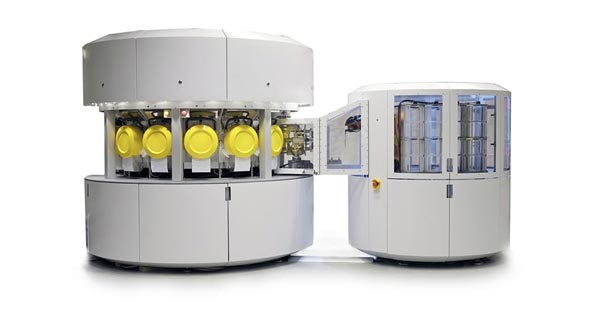
The project will use Midsummer’s UNO generic research and development engine as a platform, enabling automated research and long series of tests without supervision. The ability to use the same equipment and substrate size in research as in production allows for easy transfer for process improvements, cost savings, and more.
Utilization of Midsummer’s research and development machine has proven to facilitate thin film and tandem cell research. Last month, researchers at Prof. Yang Yang’s lab at the University of California had developed a four-pole perovskite CIGS tandem solar cell using the Midsummer machine, which achieves an efficiency of 24.9%.