
With the Energy Strategy 2030 published in February 2012, the state government of Brandenburg has set itself the goal of reducing CO2 emissions by 72% by 2030 compared to 1990 and increasing the share of renewable energies in primary energy consumption to 32%. Overall, energy consumption is to be reduced by around 23% compared to 2007.
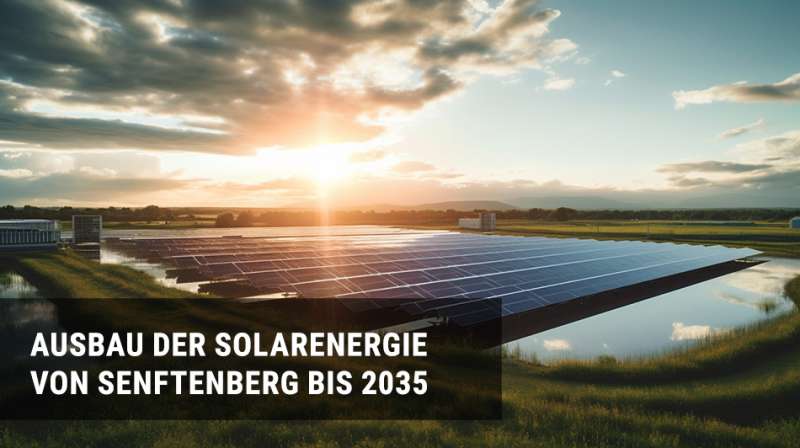
Brandenburg’s government coalition wants to promote the expansion of renewable energies and is currently planning changes to the building regulations: photovoltaic systems on public buildings are to be compulsory in the future. Private owners are to be encouraged to voluntarily use solar energy. The use of renewable energy is not new territory for the region. The largest solar park at the time, in Senftenberg, with 78 MW, went online in 2011.

The background to the current new regulations is the agreed higher expansion target for renewable energies and the predicted higher electricity consumption, in view of the fact that no new cars with combustion engines are to be registered from 2035. The plans include the following:
- Factories, supermarkets, administrative buildings and new parking lots (35 or more spaces) are to be equipped with PV.
- There should be a solar obligation for roof renovations.
- New buildings should only be approved if they have solar systems.
If you look back to 2011, you can see what power solar energy can provide.
The world’s largest contiguous solar complex in southern Brandenburg at the time has a total output of 148 MW. Since August 2011, the solar power plant has been producing green electricity for around 50,000 households. In his opening speech, Prime Minister Platzeck thanked the companies involved and said:
“Large solar power plants such as those in Senftenberg and Schipkau play an important role in meeting Germany’s energy needs and accelerate the desired energy transition. Compared to other federal states, Brandenburg is a leader in the expansion and promotion of renewable energies, as evidenced by the fact that it has twice been awarded the Leitstern as ‘Best Federal State for Renewable Energies’.”
The solar power plant was already an example of how Germany, with its global radiation, is also suitable for projects of this size – an assessment that was also shared by Senftenberg’s mayor Andreas Fredrich:
“Due to high levels of solar radiation, the large number of former open-cast mining areas and expanded energy networks, our region is an ideal location for large photovoltaic systems.”
Canadian Solar CEO Dr. Shawn Qu highlights another point that is of great importance to many communities:
“Cities and municipalities not only benefit from the relief for the environment, they also generate trade tax revenue from solar parks – or receive the compensation themselves if they operate them themselves. In addition, projects like this have a positive effect on the local economy. Most construction and operational management contracts go to local companies. We are therefore very happy to have made a contribution to the economic development of Brandenburg.”
The Senftenberg II/III plant was built on 200 hectares of the former Meuro open-cast mine in three months – the land itself is owned by the Großräschen eG agricultural cooperative – and consists of 330,000 crystalline solar modules.
“With the Senftenberg project, we are showing that large-scale photovoltaic power plants can be developed and implemented more quickly than all other types of power plants. Even today, even in a country with fewer hours of sunshine like Germany, we can produce electricity more cheaply than, for example, with offshore wind power” (saferay GmbH, Dr. Marko Schulz)
The project, which totaled around 150 million euros, was financed by three German banks. In addition to creating the necessary legal framework, special attention was paid to taking nature conservation concerns into account when planning this facility in 2011.
Torsten Käsch, Managing Director of unlimited energy, explains:
“For the skylark alone, we have set up a total of 24 hectares of compensation areas outside the photovoltaic system. In addition, the PV module rows are embedded in generous wind and green protection strips that can develop into habitats for birds and other animal species. When developing concepts for area maintenance, special attention is also paid to the protection of animals and plants.”
More information: