
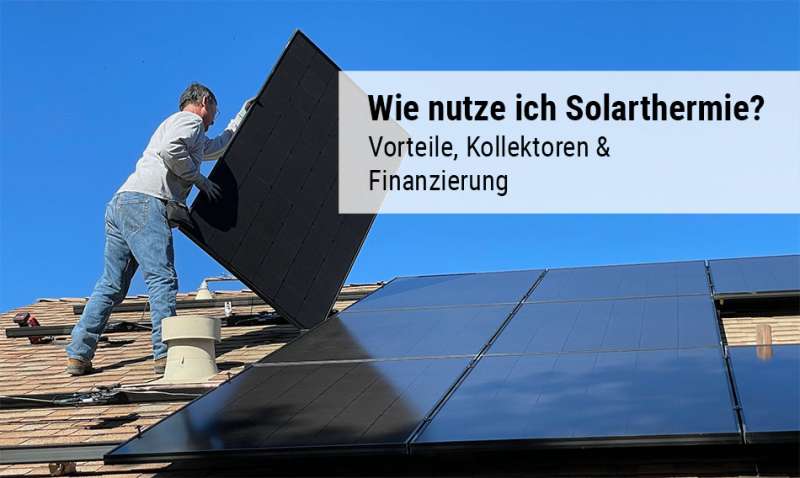
While photovoltaic systems are on everyone’s lips as part of the energy transition, thermal solar systems also offer the possibility of high savings in the areas of hot water and heating. Compared to PV systems, solar thermal energy scores points with a smaller roof area and easy integration with existing heating systems. Here we will explain in more detail what advantages a thermal solar system has and what types of collectors there are.
1. What is a solar thermal system?
A solar thermal system uses solar energy to heat hot water or the heating in the home. This means that the heating is needed less often and less oil, gas or wood is used. In summer, you can often do without heating altogether and in spring, autumn or winter, the thermal solar system also reduces the heating requirement when the sun is shining.

The most important components of a solar thermal system are solar collectors, a solar pump and a solar storage tank, which are connected to one another by pipes. A solar fluid circulates in the pipes, which is heated by the collectors and transported to the storage tank by the pump. There, the heat is transferred to the water in the storage tank via a heat exchanger and the cooled fluid is fed back to the collectors as part of the circuit.
2. The advantages of a solar thermal system
2.1. Lower costs for hot water and heating
Installing solar panels on your roof will allow you to save significant heating costs every year. On average, a coverage rate of about 60 percent is expected for a hot water system or 30 percent for a hot water/heating systemWith the current prices for oil, gas or wood, large amounts of money can be saved each year if a large proportion of hot water and heating is covered by solar collectors.
2.2. Less roof area required than for PV systems
One advantage of thermal solar systems compared to photovoltaic systems is that they require less space. Depending on the system structure, you need to calculate with 5 to 8 square meters per kilowatt peak (kWp) for a PV system, which for a single-family home with 6 kWp corresponds to an area of 30 to 48 square meters. Solar thermal systems for water would require significantly less space on the roof of a single-family home, starting at 5 square meters, or a system for hot water and heating starting at 8 square meters.
3. How to choose the right solar thermal system for your home
3.1. What types of solar thermal systems are there?
With the solar thermal systems available on the market, you can choose between flat plate and evacuated tube collectors. To the Advantages of flat plate collectors include a low price and easy installation on the roof. This makes flat collectors particularly popular for hot water systems in order to relieve the load on existing gas or oil heating systems. However, this type of collector has disadvantages in terms of efficiency, which results in lower performance on days with little sun.
Evacuated tube collectors, on the other hand, are more expensive but are characterized by better efficiency. The tube collectors heat up more quickly, which is a clear advantage, especially in months with limited hours of sunshine. The tubes also require less space than flat collectors. They can even be installed on the facade of the house, which is not worthwhile with flat collectors.
3.2. How big should the solar thermal system be?
The roof area required for solar thermal energy depends on the heat requirement in the household and the type of collector. For a pure hot water system, the required area per person is assumed to be around 1 m² for vacuum tube collectors or 1.5 m² for flat collectors. Common sizes for single-family homes are 5 to 7 m². If the solar thermal system is also to be used for heating, the required area per person increases to just under 2 m² for tube collectors or 3 m² for flat collectors. For these systems, many companies install sizes of 8 to 15 m² on the roof.
3.3. Very good ecological balance
Similar to photovoltaic systems, the environmental impact of solar thermal energy is very good due to the focus on renewable energies. Current tube or flat collectors have a service life of more than 20 years, so you can benefit from the system for a long time. However, regular maintenance of the system is important to ensure its service life. Heating hot water or heating the heating system using solar energy reduces the consumption of fossil fuels such as oil or gas, which means you protect the environment. Renewable energies such as solar thermal energy are intended to reduce the Dependence on Russian gas imports will fall significantly in the next few years.
3.4. Costs for the installation of a solar thermal system
When it comes to the cost of a solar thermal system, you have to take into account the components such as collectors or the storage tank as well as the installation. If you are using the system exclusively for hot water, flat collectors are recommended due to their lower price, which costs around 800 to 1,200 euros per square meter as a whole. Vacuum tube collectors are more expensive, with a hot water system costing between 1,500 and 2,200 euros.
The costs per square meter are lower if the solar collectors are to provide energy for hot water and heating. For larger systems, prices per square meter decrease on averageas the installation or storage accounts for a large proportion of the costs for small systems. With flat collectors, you can expect to pay between 600 euros and around 1,000 euros per square meter for hot water and heating, while with tube collectors, you can expect costs of around 1,200 to 2,000 euros per square meter.
Average costs for collectors, storage and installation for solar thermal energy:
| Type of collectors | Hot water | Hot water and heating |
|---|---|---|
| Flat collectors | 800-1,200 € per m² | 600-1,000 € per m² |
| Tube collectors | 1,500-2,200 € per m² | 1,200-2,000 € per m² |
4. What to consider when installing a solar thermal system
4.1. Use government funding programs
Solar thermal energy is an important part of the renewable energy programs to stop climate change. That is why government funding is available not only for photovoltaic systems, but also for solar thermal energy. One place to go for cheap loans is the Kreditanstalt für Wiederaufbau (KfW), where you can apply for program 261 “Residential building – loan” There is a low-cost subsidized loan with an additional repayment subsidy available if you carry out a renovation to an efficiency house level 85 or better. However, please note the exact requirements to see whether you can benefit from the program for your solar thermal system.
In addition to the development bank, you can also apply for funding for solar thermal energy from the Federal Office of Economics and Export Control (Bafa). Funding overview The Ministry has awarded solar thermal systems a subsidy rate of 25%. However, you must also comply with the conditions for funding for this program. Funding from KfW and Bafa at the same time is generally not possible in these programs.
4.2. What are the requirements for installing solar thermal energy?
A building permit is only required in very rare cases for the installation of a solar thermal system on the roof. This could only be the case for large solar collectors that significantly change the appearance of the facade. You can read the relevant requirements for solar thermal systems in the state building regulations of your federal state or ask the responsible authorities.