
Great Britain will shut down its last coal-fired power station at the end of the month. In 1882, the country was the first in the world to start using coal-fired power generation – now an era is ending. The new government wants to accelerate the energy transition even further – but the first limits are becoming apparent.
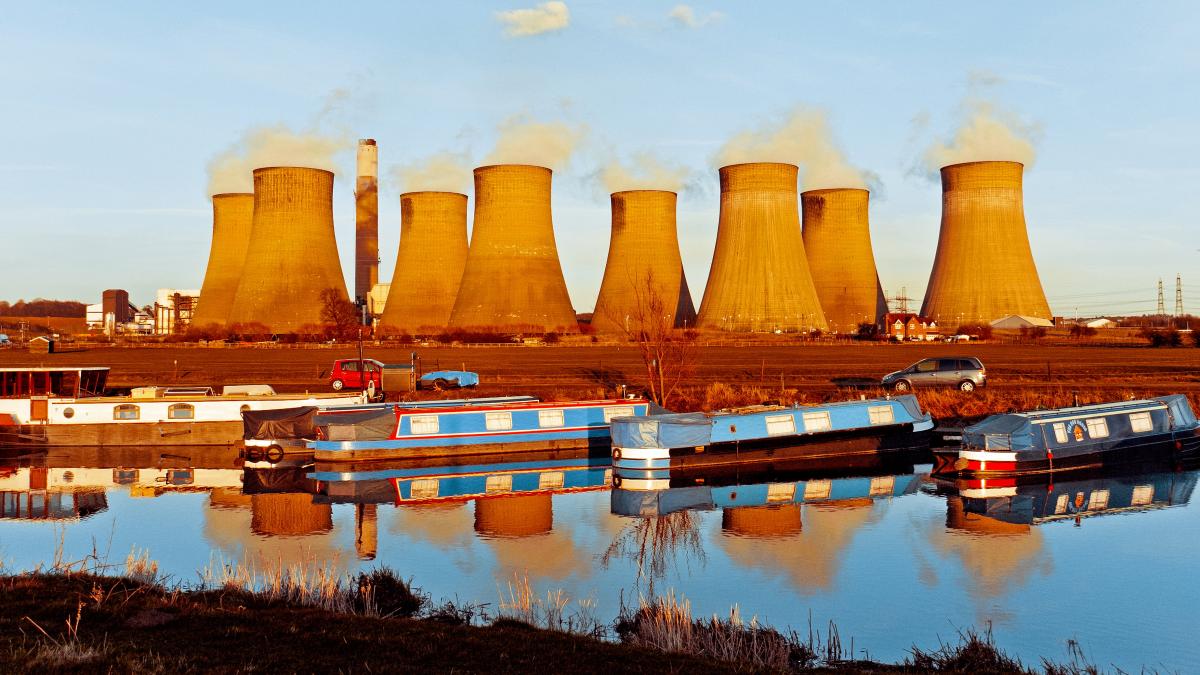
The very last delivery of coal for the power station in Ratcliffe-on-Soar arrived at the end of June by freight train. More than 140,000 coal trains have been handled at the facility since the beginning of 1968. But at the end of September, the power plant with its eight striking cooling towers south of the English city of Nottingham with a capacity of two gigawatts will finally be taken off the grid after 56 years of operation.
This means that not only one power plant from the portfolio of the German energy company Uniper on the island is ending operations. This step marks the end of an era. If Ratcliffe stops feeding electricity into the grid, coal-fired power generation will be history in Great Britain.
As of October, the country where the world’s first coal-fired power plant began operation in 1882 will be the first among the G-7 countries to completely abandon the technology. The British were pioneers 150 years ago with the Holborn Viaduct Power Station in London, which initially supplied electricity for around 1,000 street lights in the British capital.
Ten years ago it was decided to phase out coal-fired electricity from 2025. Now the UK is 15 months ahead of this schedule. Coal-fired power generation is also scheduled to end in Italy next year; Canada has set the step for 2030. In Germany and Japan, where coal is still used today for almost a third of electricity generation, coal-fired power plants are likely to be on the grid beyond 2035.
Nigel Bates is convinced that the move marks the “end of the first industrial revolution”. “It all started with coal, it will soon be over,” the technical director told the Guardian.
This development began inexorably years ago. Generating electricity with coal produces a relatively large amount of carbon dioxide. Increasingly strict emissions regulations have led to power plants being increasingly replaced by gas-powered versions.
In Great Britain, wind power in particular has played an increasingly important role in electricity generation in recent years. At the same time, the importance of coal has steadily declined. 15 years ago there were still 21 coal-fired power plants online, in 2014 there were 14 and five years ago there were only six. In the 1990s, 80 percent of the country’s electricity generation came from coal; last year it was just one percent.
Meanwhile deliver renewable energy sources such as wind and solar make the most important contribution at 43 percent, followed by gas-fired power generation at 32 percent. Nuclear power accounts for twelve percent. The rest comes mainly from electricity imports from other European countries.
The electricity mix makes it clear: Even if the dirtiest form of electricity generation is about to be phased out, greenhouse gas emissions remain an issue. The Labor government led by Prime Minister Keir Starmer, in office since July, has set itself ambitious goals to accelerate change.
It was the conservatives who enshrined in law in 2019 that the country must reduce net greenhouse gas emissions to zero by 2050. But under Rishi Sunak, the party softened some of the guidelines in view of growing skepticism within its own ranks regarding costs and feasibility.
Under Labour, becoming a “clean energy superpower” is one of the party’s five priorities in its election manifesto. Electricity generation is to be completely decarbonized by 2030 – five years earlier than the previous conservative government had planned to take this step.
A new state-owned company is intended to support the energy transition
Energy Minister Ed Miliband emphasized just a few days ago that the transformation is crucial, among other things, to expand energy security and stimulate growth.
A big step came at the beginning of the month when contracts were awarded for new offshore wind farms and solar parks with a total capacity of almost ten gigawatts – enough to supply around eleven million households with electricity.
These include Hornsea 3 and 4, two projects off the coast of Yorkshire, which the Danish provider Ørsted wants to expand into the two largest wind farms in Europe. Last year, a comparable auction had no bids because the energy companies considered the minimum purchase price offered for electricity to be too low.
The green strategy is also intended to support GB Energy, a newly founded state-owned company to advance clean energy projects, for example by acting as a co-investor for private companies.
But despite these steps towards clean energy: The road to clean electricity without carbon dioxide emissions is long. Britain is not yet even on track to meet its original goal of zero-emission energy by 2035, said Rosa Hodgkin, an analyst at the Institute for Government think tank. “Labour’s goals are even more ambitious.”
Finally, the demand for electricity will increase significantly in the coming years. The switch from the gas heaters that were previously prevalent in the country to heat pumps and the growing importance of electric cars – combustion engines will no longer be allowed to be sold as new cars in Great Britain from 2030 – are just two factors that will significantly increase electricity consumption.
The grid is considered a significant bottleneck in the expansion of environmentally friendly energy sources. housingdecarbonization of heating and transport, new jobs in industry, all of this calls for electricity, said Keith Anderson, CEO of Scottish Power.
“It’s not just renewable energy sources that we need to expand. We must also undertake the most extensive wiring this country has ever seen to enable a major modernization of our economy.”
Nuclear energy should be further expanded
In addition to electricity generation, the vertically integrated energy group also owns large parts of the electricity network in Scotland and parts of northern England. “Our grid needs a thorough repair of the electricity highways to better accommodate a modern, flexible, green energy system.”
Today, wind turbines have to be stopped again and again on windy days because the grid cannot support the load. Hodgkin also points to a lack of workers with the qualifications for the green energy transition, too little communication with citizens about necessary changes and very long planning periods for infrastructure expansion.
Finally, gas, including the associated carbon dioxide emissions as an energy source, continues to play an important role. For the time being, the power plants will be used primarily on cold, gray, windless days when wind and solar energy are lacking.
In the medium term, this should be the case Nuclear energy will be expanded in the country, although the financing of these plans is unclear. The government also wants to focus more on energy storage so that renewable energy does not have to be fed into the grid immediately, but can be used with a delay.
After all, it has been shown time and again in the past that Great Britain can manage large energy projects, said Hodgkin. The conversion of more than 13 million households from oil to gas heating in the 1970s is just as much an example as the “Dash for Gas” in the 1990s, when 40 gas power plants were completed within ten years.
Uniper is now planning for the post-coal era. After the power station is decommissioned from October, the eight cooling towers that have shaped the landscape in Nottinghamshire for decades will be demolished in the coming years. In the medium term, a research center for emission-free technologies is to be built on the site.
Claudia Wanner writes primarily about them for WELT British economy.