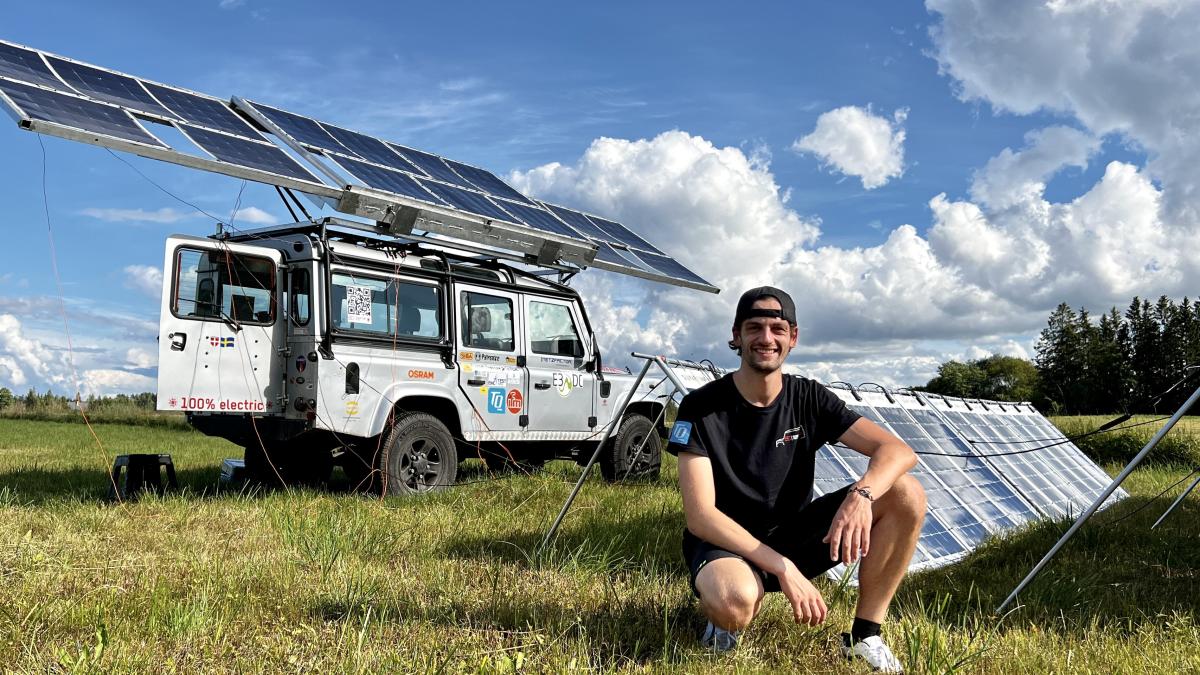
Environmental engineer Felix Sommerfeld explains the latest solar car project at Bochum University Environmental engineer Felix Sommerfeld explains the latest solar car project at Bochum University

Environmental engineer Felix Sommerfeld explains the latest solar car project at Bochum University

Source: Bochum University of Applied Sciences

You can listen to our WELT podcasts here

In order to display embedded content, your revocable consent to the transmission and processing of personal data is required, since the providers of the embedded content as third-party providers require this consent [In diesem Zusammenhang können auch Nutzungsprofile (u.a. auf Basis von Cookie-IDs) gebildet und angereichert werden, auch außerhalb des EWR]. By setting the switch to “on”, you agree to this (which can be revoked at any time). This also includes your consent to the transfer of certain personal data to third countries, including the USA, in accordance with Art. 49 (1) (a) GDPR. You can find more information about this. You can withdraw your consent at any time via the switch and via privacy at the bottom of the page.

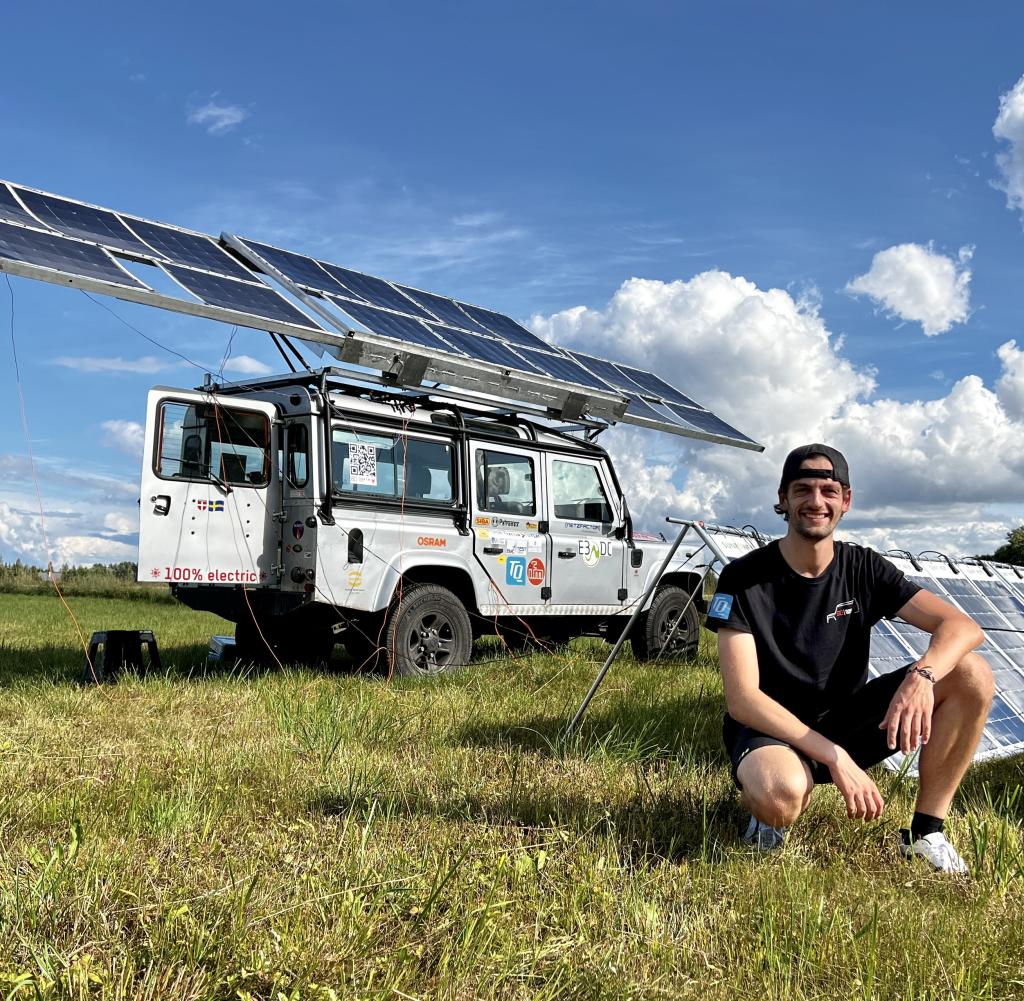
At the Bochum University of Applied Sciences, environmental engineer Felix Sommerfeld and fellow students converted a Land Rover with engine damage into a solar car. Now he has set off on a trip to Europe with his fellow students to show the car’s potential.

An June 24th, our team started at the university Bochum with our tour. We are all students and drive through Europe in a Land Rover Defender that has been converted into a solar car. At the beginning of 2021 we started planning, bought a car with engine damage and started with the conversion. For over 20 years, at the university Bochum built solar cars. We want to show the potential of this technology. We used to build aerodynamically optimized lightweight racing cars for the “World Solar Challenge” in Australia.

Now we wanted to prove that we can also convert a production vehicle. That is more sustainable because we can continue to use almost all parts of the car. And flying around the world with 20 people isn’t good for the environment either. We replaced the internal combustion engine and the tank with a Tesla electric motor and 16 cell modules. The electricity is generated by solar cells with an area of ​​up to 80 square meters. These generate enough electricity during the day to charge the vehicle’s battery. If the sun is shining, the car will be charged in a day, but it can also take two to three days to be fully charged.

One problem is the current gearbox. We can only drive in one gear and that with 16,000 revolutions. That’s bad for range. A new, specially developed gearbox is currently being installed in Riga. We will then not only be able to drive more than 300 kilometers, but also up to 100 kilometers per hour. The rover has already been to Denmark and Scandinavia. With a new gearbox we’re going to Warsaw first, then we want to go south, Turkey and Greece are also on our agenda. We don’t know yet whether we’ll really make it all the way. What is certain, however, is that we will be on the road for 100 days.

This is where you will find third-party content

In order to display embedded content, your revocable consent to the transmission and processing of personal data is required, since the providers of the embedded content as third-party providers require this consent [In diesem Zusammenhang können auch Nutzungsprofile (u.a. auf Basis von Cookie-IDs) gebildet und angereichert werden, auch außerhalb des EWR]. By setting the switch to “on”, you agree to this (which can be revoked at any time). This also includes your consent to the transfer of certain personal data to third countries, including the USA, in accordance with Art. 49 (1) (a) GDPR. You can find more information about this. You can withdraw your consent at any time via the switch and via privacy at the bottom of the page.


Source link

By Maria S

Leave a Reply

Your email address will not be published. Required fields are marked *