
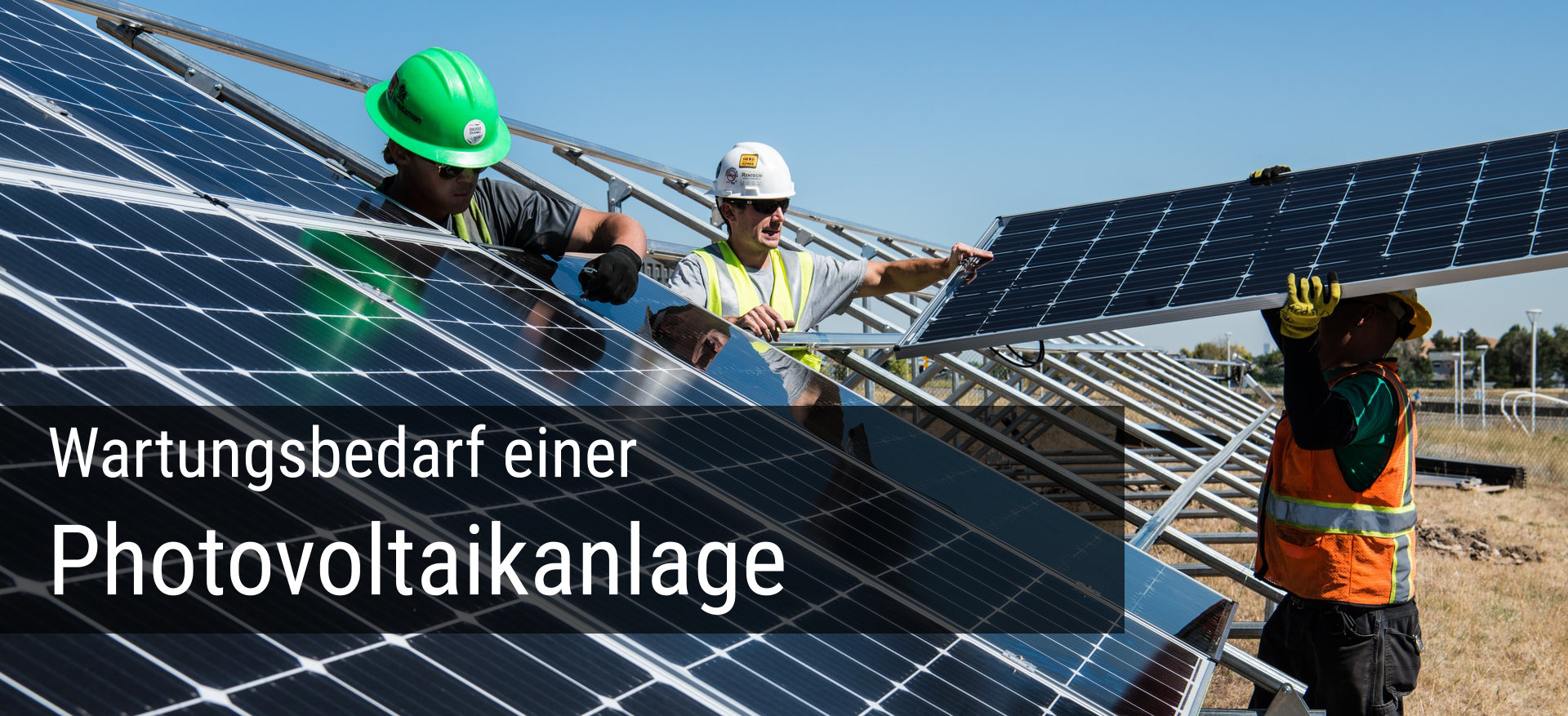
More than ever, a solar system is seen as a reliable ecological helper with strong returns. Due to this reputation, many interested parties no longer even find out about the maintenance requirements that can be associated with the system. In this article we want to take a closer look at the individual elements. This ensures safe and efficient operation over the long term.
photovoltaic modules are designed to be a rare occurrence only maintenance require. Their fixed position without mobile parts reduces the maintenance effort enormously. However, practical operation shows that the modules are exposed to the weather around the clock and in all seasons. This can lead to certain risks after a few years.
For this reason, it is important to carry out at least a visual inspection at short intervals. Experts recommend examining all elements at least every six months. In particular, the tightness is in the foreground. Depending on the position and roof construction, dirt or significant tension in the fastening sometimes occurs. Annual cleaning can make sense if there are heavy deposits.
2. Safe commissioning
That the electrical system itself is in order is already checked when the system is commissioned. The responsible electrician must take the time to closely verify the safety of the installation. The same applies to all electrical equipment solar systems the DGUV V3. This is to reduce the risk of accidents as much as possible. More information about the DGUV regulation 3 can be found here on this page.
The DGUV has published its own information brochure for the installation and maintenance of the systems. This can be ordered directly on the Internet for little money. All information is here on this page to find.
2.1. wiring and inverter
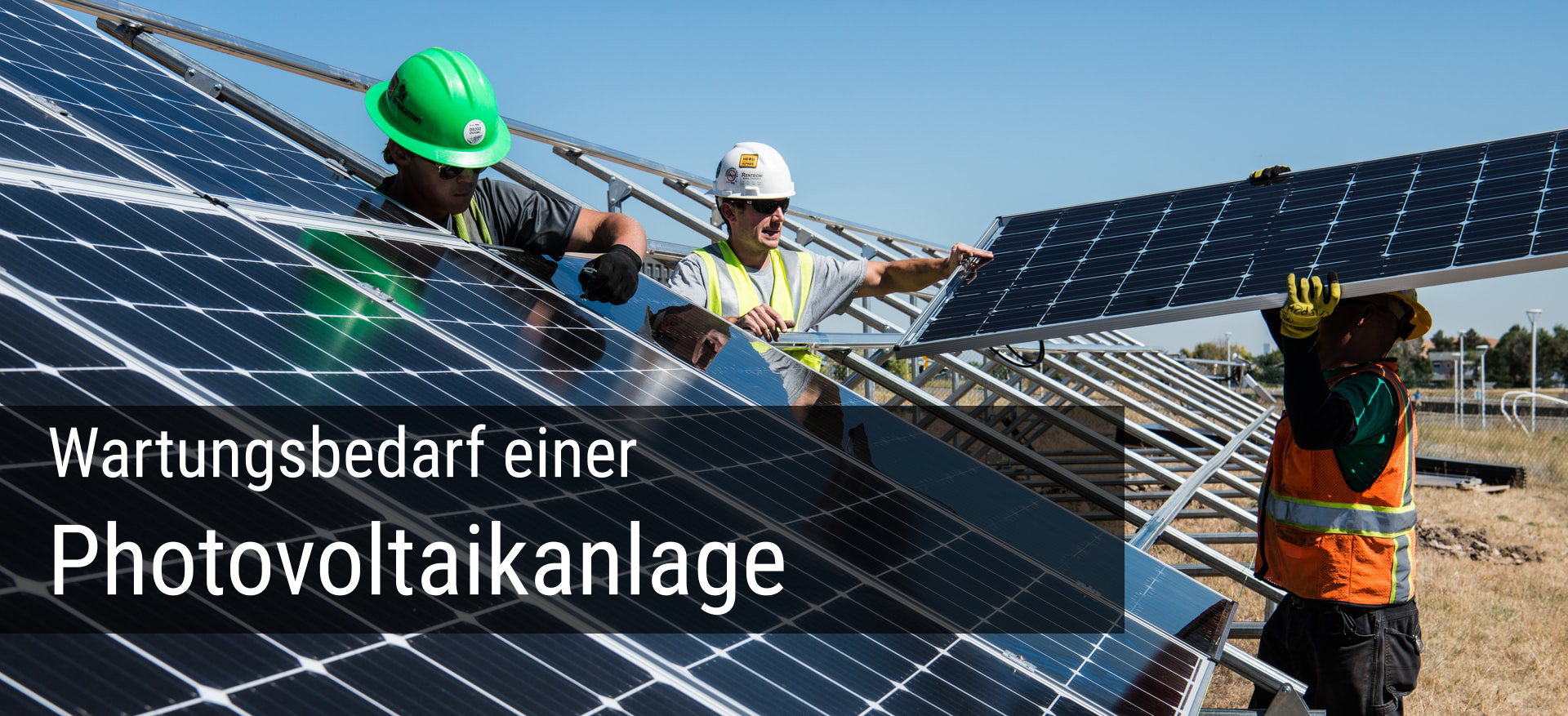
It’s not just the individual modules that are exposed to the weather. The same applies to parts of the solar cables. These are of course designed for outdoor use and must provide the appropriate resistance. Nevertheless, the plug connections must be checked regularly. Even laypeople can check the condition of the cables. A cable jacket that is still in good condition serves as a clear indication in this case.
Compared to the solar modules, the inverter is characterized by a significantly lower level of robustness. The service life is usually given by the manufacturer as about 10 years. Of course, this also means that there is a somewhat greater need for maintenance. Experts recommend checking the plug connections to the individual solar cables, but also the DC and AC sides. However, faults can be quickly identified with a quick glance at the inverter.
2.2. The counter
To a certain extent, the meter is the economic heart of the entire system. For this reason, the legislator stipulates that this element is regularly calibrated. However, the review should not be seen as a chore, in the end it also serves your own interests. Because correct information is essential for obtaining the feed-in tariff decisive. The effort that can be associated with the calibration pays off in many cases.
A different situation is when the meter is owned by the network operator. In this case, there is the advantage that both maintenance and calibration do not fall within your own area of responsibility. Instead, it is sufficient to regularly log the meter readings.