
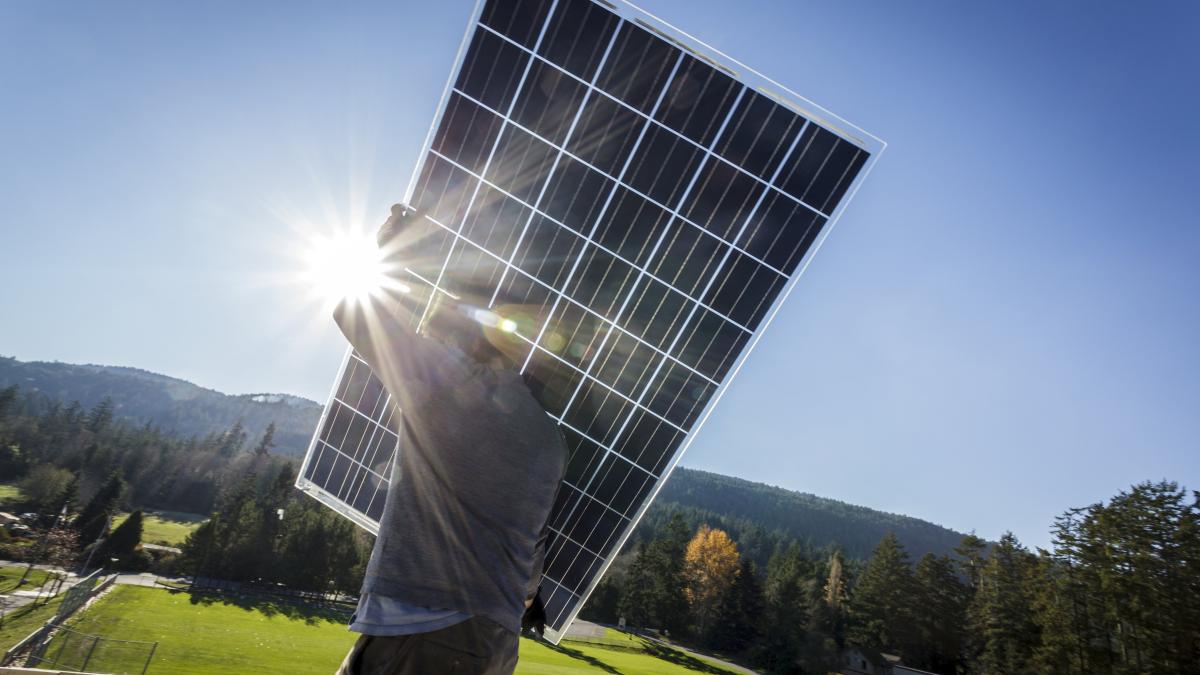
SA comprehensive tax break for the purchase of photovoltaic systems has been in effect since the beginning of the new year: the federal government has introduced a so-called zero tax rate for solar modules, battery storage and many other components. The installation is also exempt from sales tax. Renewable energies are to be used as soon as possible get extended, and in the case of photovoltaics there has so far been no support for the purchase, only for operation, in the form of a feed-in tariff. So now a tax break that amounts to several thousand euros for larger systems.
However, when the German state cuts a tax, many citizens initially react with distrust. Rightly so, as this case shows. Because as it turns out, the Federal Ministry of Finance forgot to clarify some important details. A number of craft companies currently do not know how to issue their invoices. In the worst case, they are even left with their own sales tax payments and run into liquidity bottlenecks.
 photovoltaic panels”/>
 On the website of the Ministry of Finance, it sounds clear at first: “For the area of sales tax, it is planned that the delivery of photovoltaic systems will no longer be subject to sales tax from January 1, 2023 if they are installed on or near a residential building (zero tax rate ). The regulation applies to all components of a photovoltaic system, e.g. B. photovoltaic modules, inverters or battery storage.”
But at second glance, there are many questions that should be familiar to anyone who already operates a photovoltaic system or is planning one: What about other components such as cables or fastening material? What about unfinished assets whose installation started last year but hasn’t been completed? After all, it is about an estimated three-digit sales tax million amount.
The financial policy spokeswoman for the CDU/CSU parliamentary group, Antje Tillmann, asked the Ministry of Finance: Is sales tax really no longer due for all components and all installation services and does the rule only apply to complete systems, i.e. systems approved by the supplier, or also to parts? The last question in particular is likely to affect many homeowners.
If about as many solar power systems were planned and installed last year as in 2021, the installation companies might not know how to calculate with around 40,000 systems. At least if they weren’t completely installed within a few weeks and weren’t accepted before the turn of the year.
Some craft businesses are even threatened with bankruptcy
The answer from the Ministry of Finance (BMF) is available to WELT and reveals some gaps: The sales tax law, paragraph 12, contains a “final list of the favored items”. This included all “essential components for the operation of a photovoltaic system”.
But what these are again is unclear. Basically, it could be every single component. This will now have to be explained “promptly” by the tax authorities “in the context of a BMF letter”, according to the BMF. In other words, the details have yet to be worked out.
“While the federal government is taking its time discussing the scope of the sales tax rule, thousands of craft businesses are wondering what tax rate they have to use to identify the components of the installed PV systems,” criticized Union MP Antje Tillmann. “Due to the currently high demand, some craft businesses are even threatened with insolvency because they pre-finance the components but cannot issue proper invoices,” Tillmann continues.
The problem is well known in the solar industry. “There are still a number of open questions regarding the application of the zero tax rate by specialist companies and in online trading,” says Carsten König, Managing Director of the German Solar Industry Association (BSW). The association also represents solar installers.
Because it is unclear which components are now exempt from sales tax and which are not, the association now recommends taking a step backwards into the old tax world. “Because companies bear the risk of having to pay sales tax in arrears if it later turns out that they incorrectly charged the zero tax rate for components instead of 19 percent, we recommend charging 19 percent for the cost components in question and offering customers to correct the invoice if necessary,” says BSW Managing Director König. So if in doubt, ask for the sales tax and calculate again afterwards.
On the other hand, clarity prevails for those homeowners who have already had one in the past photovoltaic system installed and waived the small business regulation, i.e. used the input tax deduction. They only pay the net purchase price, but have to pay sales tax on all subsequent income, just like an entrepreneur – even on the electricity they use themselves.
The bureaucratic effort is correspondingly high – and remains so, because in its answer the BMF made it clear that it did not want to change anything: “The federal government does not intend to do this.” Only after five years can the previous VAT savers switch back to the small business regulation .
Another tax advantage, however, seems to work without complications: no income tax is due on the electricity fed into the grid, also for systems with an output of up to 30 kilowatts, or 15 kilowatts per apartment in multi-family houses. This tax relief even applies retroactively to January 1, 2022.
“Everything on shares” is the daily stock exchange shot from the WELT business editorial team. Every morning from 5 a.m. with the financial journalists from WELT. For stock market experts and beginners. Subscribe to the podcast at Spotify, Apple Podcasts, Amazon Music and deezer. Or directly by RSS feed.