
Anyone who strolls through pretty suburban housing projects with their many single-family and multi-family homes can see with their own eyes, from the numerous solar modules adorning the roofs, that the green energy transition is becoming more and more popular with citizens.
Those who live in rented accommodation may be wondering how they can participate in the trend towards self-sufficiency with solar power. After all, they do not have the option of using a roof to install a photovoltaic system.

There is also the prospect for tenants to become part of this global movement. The solar system for the balcony is the solution. 200,000 tenants in Germany are already using it to supply themselves with Green electricitycover around a fifth of their electricity needs through self-sufficiency and provide relief against exploding electricity prices.
1. How do balcony power plants work?
Solar systems for balconies are small power plants. Since they pass the electricity generated directly on to the consumer or, if necessary, feed it into the public power grid, they are also called plug-in solar devices. The direct current is converted into the usual 230 V alternating current used in households by an inverter. Balcony PV systems are much smaller than PV systems on house roofs and do not require installation. They can be set up on the balcony, terrace or gazebo.
They usually have no more than two solar modules and the rate of solar power utilization is rather modest at 200 to 600 watts. If you have a larger model or combine individual plug-in balcony power stations, you can generate an electricity gain of over 600 watts.
In this case, however, the user should note that the device is no longer considered a mini PV system, so the requirements become more stringent. After installation with a mounting frame or other fastening system, the power plants are ready to plug in.
2. Which PV cells are best?
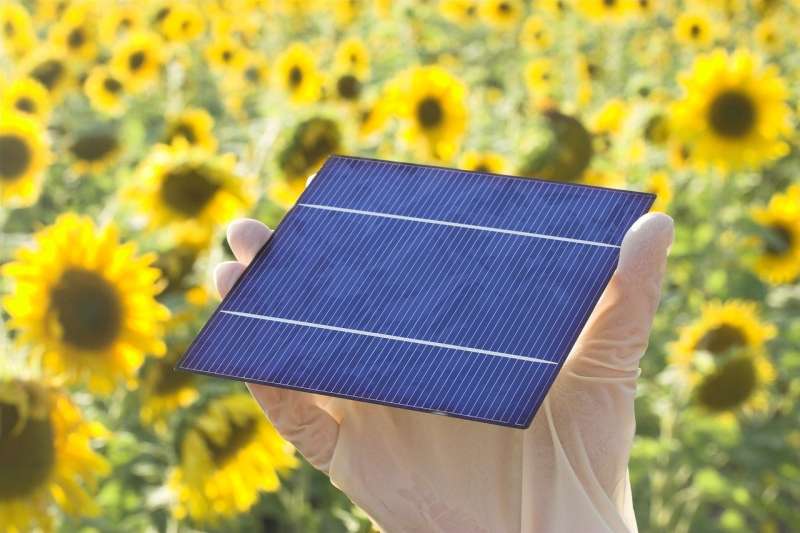
Tenants can initially choose between black monocrystalline and blue polycrystalline PV cells for their mini solar system. With an efficiency of 18 to 20%, monocrystalline solar systems are slightly more efficient than polycrystalline power plants, which achieve 15 to 17%. Nevertheless, polycrystalline PV systems dominate in use because they traditionally offer the best price-performance ratio for the customer. However, this has recently begun to change.
In comparison, the light and handy thin-film solar systems for the balcony seem modest. The sunlight utilization is very low at 6 to 10%, even if they are more tolerant of weak (diffuse) light and very hot sunlight and in this case have lower losses. Novel and CIGS solar systems are innovativewhich, with their copper-indium-gallium-diselenide alloy, have greatly improved thin-film modules and almost reach the efficiency of monocrystalline panels.
Further information can be found in this Solar system comparison.
3. The ideal orientation of the solar modules
Solar modules have the maximum efficiency when Inclination angle of almost 35 degrees to the south side If necessary, it is also possible to orient the system towards the west or east. It makes no sense to install a solar system on the north side alone, as the friction losses would be too high. The modules should not have any shadows so that the sun’s rays can reach their destination unhindered.
4. More than double energy gain with storage
If you want to further improve the effect of your PV system, you can combine it with a storage system. In practice, it has been shown that the utilization of mini photovoltaic systems is more than doubled if excess electricity can be stored in a battery and does not automatically flow back into the public power grid.
Tip: Subsidies for balcony systems are explained in detail in this article.
4.1. Legal requirements
Unlike solar systems in condominiums, the procedure for mini photovoltaic systems is straightforward. The grid operator must be informed and a registration is made to the Market master data registerUnfortunately, the small power plants require a permit from the landlord. However, since no installation or structural changes are required for their construction, most landlords are accommodating in this regard.