
In view of the ever-increasing electricity prices, more and more consumers are deciding to operate a solar system. Such a system is usually the easiest way to produce your own electricity and thus not only save costs in the long term, but also make an important contribution to the environment.
Even if homeowners are no longer subsidized to the extent that they were a few years ago, running a solar system is in most cases worthwhile, both financially and in terms of the environment. The decentralized generation of electricity using solar technology is the ecologically most sensible way to use clean electricity.

1. The appearance of a property changes
The basic requirement for the operation of a solar system is the available roof area. The costs for a solar system have fallen somewhat in recent years, but with acquisition costs of around 6,000 to 12,000 euros, they still represent a significant investment for many consumers.
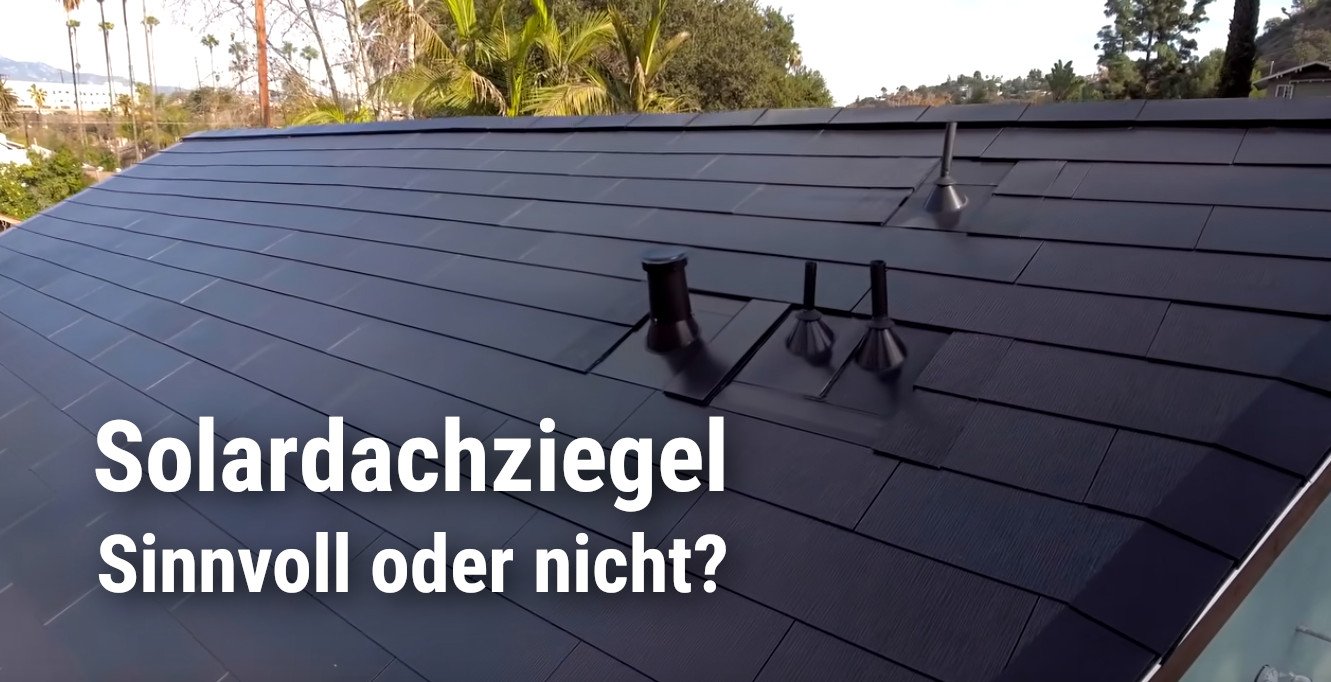
A solar system also changes the external appearance of a property. Under certain circumstances, homeowners decide against a solar system simply because it changes the appearance of the house significantly. If you value aesthetics, you don’t necessarily have to do without the use of self-produced solar power – solar roof tiles can be easily integrated into the existing roof.
2. Special product solar roof tiles
The name suggests that a solar roof tile is a type of roof covering that is able to generate electricity from solar energy. In principle, solar roof tiles work just like ordinary ones solar panels, but they fit much better into the overall picture of the house. As a rule, corresponding solar roof tiles do not replace the existing roof tiles, but are mounted on them. In many cases, solar roof tiles can therefore be worth considering.
The idea of manufacturing roof tiles directly as solar modules is plausible and by no means new. Already in 1993 the first patent was registeredwhich referred to the use of solar panels and roof tiles.
Today’s solutions are of course much more advanced and more powerful. Nevertheless, there are aspects that have ensured that corresponding solutions have not yet been implemented across the board.
- A key aspect here is the higher cost compared to conventional solar modules.
- Given the size of a roof tile, around 15 solar roof tiles are required per square meter of roof area.
- These individual modules must all be connected to one another separately.
- The high expenditure of time ultimately justifies the comparatively high costs.
2.1. efficiency reduced
In direct comparison to ordinary solar modules, the Efficiency of solar roof tiles slightly belowon average it can be said that the yield about a third worse fails.
- So if you are primarily concerned with economic efficiency, you should better do without solar roof tiles. Of course, the exact costs always depend on the respective manufacturer, the roof shape and the roof area, and the follow-up costs must also be taken into account.
- The sheer number of solar roof tiles also makes the system potentially more error-prone, especially with large roof areas.
- Also the cost of repairs and maintenance are higher than with conventional solar modules.
Whether solar roof tiles are worthwhile in individual cases depends not only on personal ideas but also on external factors. Further background information on this can be found below Link on the pages of DZ-4
Normal solar modules with a better price-performance ratio: If you just look at the price/performance ratio, normal solar modules perform significantly better when it comes to the return on investment. In addition, thanks to special rental models, these are also affordable for almost every homeowner who does not want to pre-finance the project with a one-off sum. The solar roof tiles, which are undoubtedly beautiful to look at, are therefore more of a niche product.
2.2. In-roof solar modules as an additional alternative
So-called in-roof solar modules represent a kind of middle ground between solar roof tiles and conventional solar modules. Such a system consists of larger, connected modules which are embedded in the roof covering.
In contrast to conventional solar panels, in-roof solar panels are much more unobtrusive. Another advantage of in-roof solar modules is that the modules often replace the existing roof insert. On the one hand, they form a very homogeneous roof layer, and on the other hand, costs can be saved, especially for new buildings or new roof coverings.
So if you shy away from conventional solar modules, you may find a suitable solution for your property in in-roof solar modules.
2.3. In principle, solar tiles are more for amateur projects
Because of the look, solar roof tiles can also be of interest to people who cannot opt for a conventional solar system. Certain structural changes may be restricted, including the operation of a solar system. This is most evident in buildings that are listed monuments. In such cases, solar roof tiles are usually the only way to operate a solar system. If a listed building is to be equipped with a solar system, solar roof tiles can offer a solution – and the structural change remains minimal.
In contrast to large-area roof modules, solar roof tiles are more for amateur projects. If the money plays a subordinate role or the appearance is more important than the yield of the system, the use is quite conceivable.
Conclusion: One can assume that there will be further developments in the field of solar technology in the coming years. The prices for solar roof tiles will therefore most likely continue to fall. Until then, in-roof solar panels offer more of an alternative to conventional solar panels.