
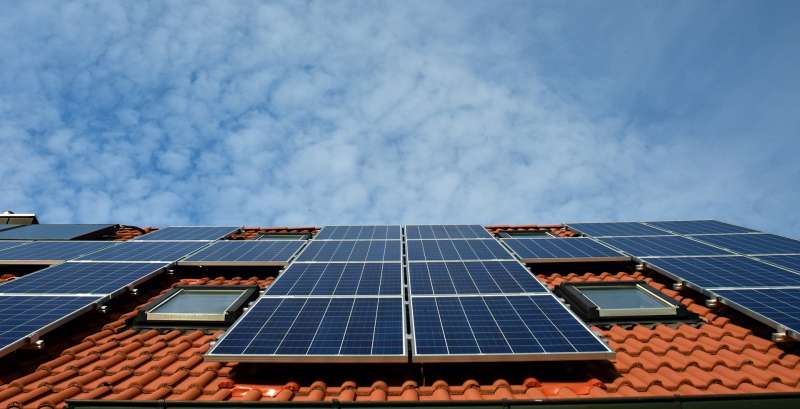
The issue of sustainability is becoming increasingly relevant in energy supply. This is due on the one hand to rising prices and on the other hand to the search for independent or renewable energy sources to protect the environment. Many homeowners opt for a solar system on the roof to generate electricity or a fireplace in the living room as additional heating. Both technologies can also be sensibly combined to save energy, especially in the transitional period.

1. Advantages of a fireplace
A fireplace can be installed in a home with very little space required. It is not permanently installed, but only has a connection to the chimney. The heat generated radiates into the room in all directions and the blazing fire can be comfortably viewed through a pane of glass. In addition, the models are usually cheaper than permanently installed fireplaces. The trend is even moving towards water-conducting fireplaces. They not only supply the house with heat, but also reduce the load on the heating system. Domestic and heating water are generated from the heat of the fireplace, saving money in the long term and protecting the environment. The heat generated also reaches the other rooms in the house.
Fireplace stoves are highly energy efficient and use very little fuel. Since it is a renewable resource, the heating method is considered environmentally friendly and has a good CO2 balance. The wood only gives off as much CO2 during combustion as the tree absorbed during its growth. Whether it is a combi stove, Swedish stove or water-bearing stove – Primus provides information on the different types on its website and explains the advantages of each.
2. The combination with a solar system
The stove is hardly ever used in the summer months. The heating system can still be supported by a renewable energy source: solar thermal energy. The solar system heats the heating water and domestic water in order to save fossil fuels in the system and reduce running costs. A water-bearing stove can be sensibly combined with a solar system. Both systems are connected to a storage tank. The water can therefore also be used at sunset or after the fire has gone out. The combination is not only practical, but a modern type of environmentally friendly and sustainable heating. Anyone who wants to improve or convert their system should think about this interaction.
3. Replacing the central heating?
Both systems in combination cannot replace central heating. This also applies to passive houses or low-energy houses. The combination of a water-bearing fireplace and a solar system is not permitted as the sole heating system. The building still needs a conventional boiler that runs on oil or gas. Alternatively, there is the Pellet heating or the heat pump as a system. The central heating system in the house requires correspondingly low exhaust emissions, which a fireplace cannot achieve. The chimney sweep would therefore measure more precisely and treat the fireplace like a gasification boiler.
Note: Nevertheless, it makes sense to support the classic heating system with modern technology. This works best with a buffer storage tank.
4. What should be taken into account when planning?
The new heating system and its extension must be planned precisely. The combination creates a complex system in which all components must be coordinated with one another. A complete new plan is usually completed more quickly than a combination of existing components. The entire system is made from several components. When choosing a fireplace, for example, it depends on whether its output is sufficient for the volume of the room. A buffer tank absorbs the heated water and only releases it when needed. The solar collector uses the sun’s energy for the same water cycle. Here you can choose between flat collectors or tube collectors. Of course, a corresponding number of pipes, valves and safety systems are necessary to ensure that no negative pressure is created and the entire technology runs efficiently.
4.1. Calculation of costs
The costs for a water-bearing stove with a solar system are difficult to calculate and vary greatly. However, a total expenditure of 6,000 to 8,000 euros is not uncommon. The more power the stove has, the more expensive the models are. The system must be tailored to local and personal needs. A tube collector is usually cheaper than a flat collector. A combination buffer tank or a hygiene tank costs over 1,000 euros. In addition, work hours for installation must be taken into account.
While the fireplace stoves are not subsidized, there may be a subsidy for the solar thermal system. The prerequisite is the built-in storage. The Promotion of the plant should at least be checked and helps with the selection of technology. The basic state subsidy is a flat rate of 2,000 euros. In addition, the heating system should be able to be optimally regulated. This is the only way to ensure the best possible energy generation and energy distribution in the household. The highest efficiency is usually in the transition months, such as spring or autumn.