
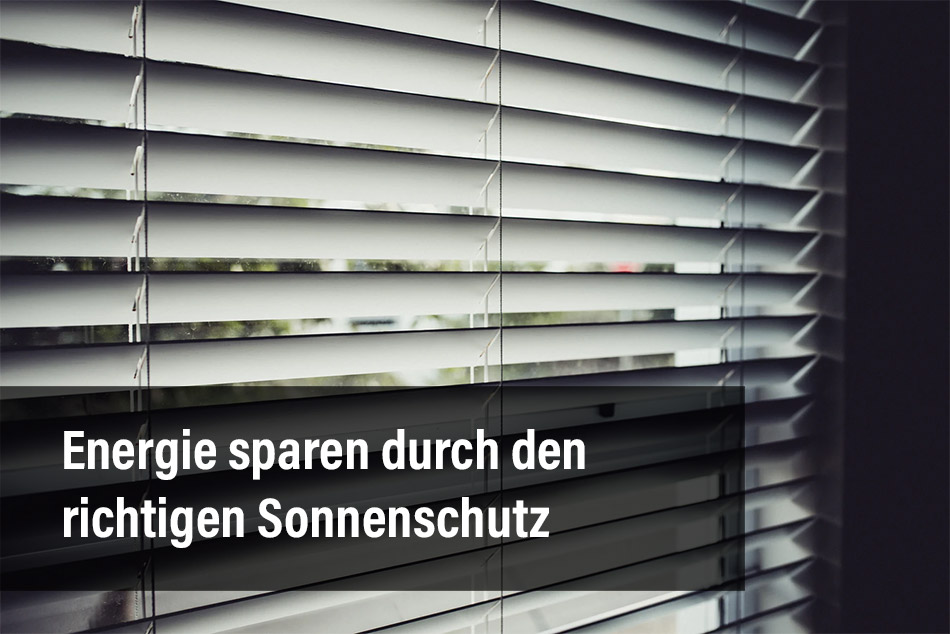
The reduction of CO2 emissions is the central task in the fight against climate change. However, heating with fossil fuels in particular releases large amounts of CO2, which means that temperatures on earth continue to rise. The reduction of energy consumption for heating is therefore an important challenge. In addition to cost-intensive and complex measures such as facade insulation and the installation of modern heating systems, less complex structural changes can also make a significant contribution to reducing CO2 emissions.
It is thus possible to significantly reduce energy consumption by installing honeycomb pleated blinds on windows and patio doors. Researchers at the Fraunhofer Institute for Building Physics found out in a study that up to twelve percent of energy can be saved in a typical detached house if honeycomb pleated blinds cover the glass surfaces from the inside on cold winter nights. Viewed over the year, this results in a saving of around seven percent. The reduction in the required heating energy in offices is even greater, since the usage behavior here differs from that in a single-family home.
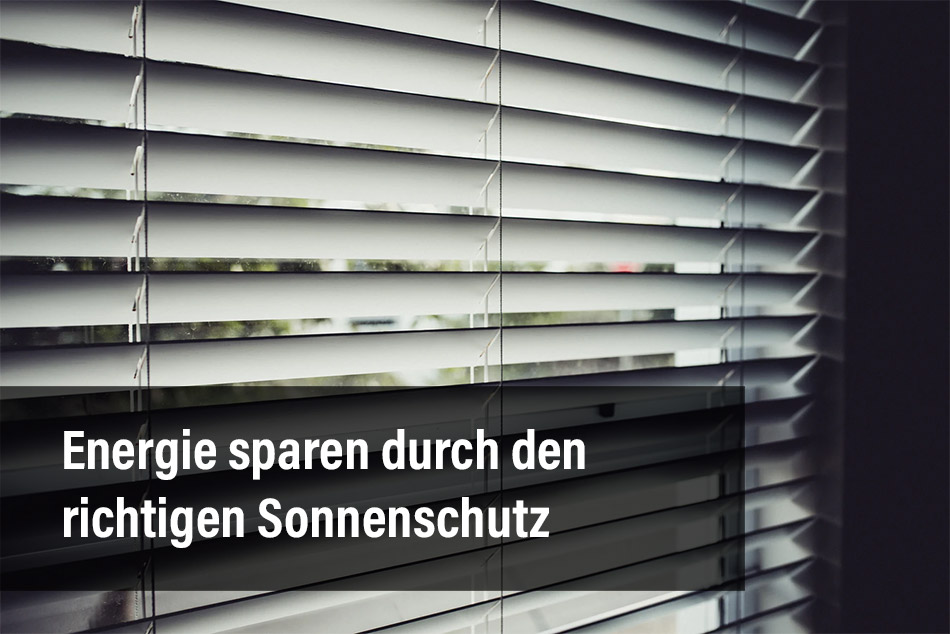
Under optimal conditions, energy consumption and the associated heating costs in offices can be reduced by up to 25 percent. as honeycomb pleated blinds are energy-saving privacy and sun protection Versatile for use in a wide variety of rooms.
1. Energy-saving effect of honeycomb blinds scientifically proven
This effect is achieved through the special structure of honeycomb blinds. They consist of two layers of fabric that are firmly connected at the edges. This creates the honeycomb typical of this window decoration, which gave the curtains their name. The air in the honeycomb forms a cushion that has an insulating effect. In summer, this air cushion protects against the penetrating heat, in winter it prevents the laboriously generated heat from being dissipated to the outside through the glass surfaces. At the Fraunhofer Institute, researchers have investigated the extent to which honeycomb blinds contribute to increasing the heat transfer resistance on glass surfaces.
The so-called U-value serves as a measure for the heat transfer resistance. The lower this U-value, the less heat is dissipated through a component, in this case windows and glass doors.
Depending on the type of glazing, a reduction in the U-value of between four and 49 percent was observed when the honeycomb blinds were lowered.
The greatest saving effect was found in windows with single glazing. The advantage of triple glazing is less significant, but still clearly measurable, as this already has a high insulating function.
Honeycomb pleated blinds, in which the air cushions are additionally shielded by an aluminum layer inside the honeycomb, offer particularly good insulation.
1.1. Honeycomb pleated blinds score with other advantages
In order to use the energy-saving effect of honeycomb pleated blinds optimally, they should be fully lowered during the cold hours of the day and especially at night. The pleated blinds can only develop their full effect if the entire glass surface is shielded. Even with the pleated blinds down, light continues to penetrate the room.
Especially in the dark season, daylight is of great importance for well-being. This does not have to be dispensed with in the case of translucent window decorations. An exception here are models made of heavy fabrics, which are used specifically to darken bedrooms.
In addition to their insulating properties, honeycomb blinds score with numerous other advantages and functions. They unfold their effect, among other things, as
- opaque privacy protection
- effective noise protection
- attractive decorative element
- Total blackout element
2. Pleated blinds also help to save energy in summer
Not only in winter, but also in summer, pleated blinds help to reduce energy consumption and the associated costs as well as CO2 emissions. The number of hot days on which just by using a air conditioning tolerable temperatures are achieved in a room is likely to increase further in the future. Not only honeycomb pleated blinds, but also other window hangings can help prevent the interior from heating up and the use of energy-guzzling electrical devices.
As sun protection, pleated blinds and roller blinds also ensure a glare-free and pleasant atmosphere, especially in offices, since annoying sun rays are effectively shielded.
3. Easy installation without drilling – therefore also suitable for rented apartments
In contrast to other energy-saving measures, pleated blinds can be easily retrofitted without any great technical or structural effort. Honeycomb blinds can be attached to all types of windows, including roof windows or windows with unusual shapes.
No special expertise or special tools are required for assembly. In many cases, such as with modern plastic windows, not even a drill is required. Here the clamping shoes serving as a holder are glued to the window frame. If this does not offer enough space, it is also possible to attach clamp brackets to the frame of the window sash.
Since assembly is possible without drilling, tenants also have the opportunity to make a contribution to climate protection with the help of honeycomb pleated blinds and at the same time permanently reduce their ancillary rental costs.
It does not always require expensive technology and complex renovation measures to make a contribution to climate protection. Even simple things like honeycomb pleated blinds help reduce energy consumption for heating and cooling. The fact that the energy costs for heating are also reduced as a result is a pleasant side effect that makes the decision to invest in climate protection even easier.