
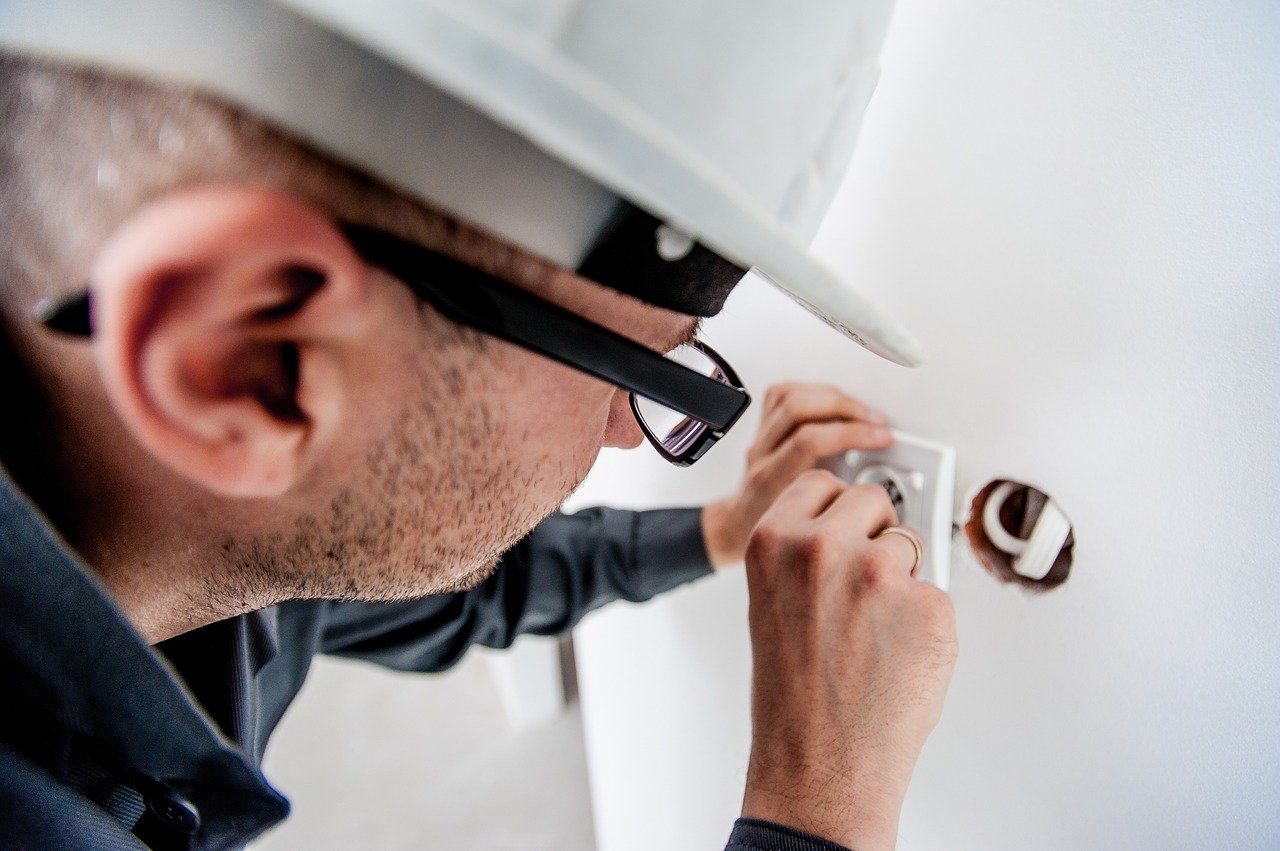
The DGUV V3 test helps to prevent accidents and fires caused by electricity in your company or company. Even a small damage to a cable, an insulation or the protective conductor or a slightly loose terminal connection can be the cause of a fire or other accidents. The DGUV V3 helps to eliminate these shortcomings.
1. Legal requirements
The examiners eliminate and detect at the DGUV test all defects in portable devices before damage occurs in your company. All legal requirements are met and implemented. Portable equipment (electrical) includes, for example, your hand-held power tools or cable drums or device connection cables. Household appliances or drills and desk lamps are also included. In contrast, there are also stationary and stationary or non-stationary systems. The demands on these portable devices vary, so you can determine how far apart your exams are. Because a floor lamp, for example, is much less stressed than a drill.

1.1. course of the exam
The DGUV V3 always depends on the respective protection class of your devices. With protection class I you have protection by the protective conductor, with protection class II you have protection by double insulation and with protection class III you have protection by a low voltage. A protective conductor is an additional contact (protective contact) with which dangerous electrical currents can be safely diverted. This has a green-yellow insulation. The scope of the test initially provides for an inspection of your respective device, during which it is checked for external damage or loose clamping points and charred parts or kinks. Then the electrical resistances or currents are measured in the respective protection class and a comparison is made with the legally specified limit values. Furthermore, the functionality and safety of the device are tested and the tester can thus rule out operational and mechanical sources of error in your devices. Finally, the test is evaluated and documented and the test results are recorded. The inspector makes a specification or recommendation for you and arranges a new inspection date.
2. Who carries out the DGUV V3?
The DGUV V3 test on portable devices requires precise and professional knowledge of electrical engineering. The tester must also be precisely aware of the measuring methods and the technical rules and defects. Skilled electricians who have more work experience are suitable for this. Anyone who has completed electrical engineering training (master craftsman, journeyman, technician, engineer) and has worked in this industry for at least a year can also take this test for you. However, in order to maintain the status, the examiner must constantly update his knowledge and demonstrate regular qualifications.

3. Special case: solar systems
For solar systems, there is a solar system test that helps homeowners here. One photovoltaic system belongs to the electrical fixed installations compared to the mobile devices. This solar test is after VDE 0100-600 carried out and checks the functionality of your system as well as the economic efficiency. As the owner, you can be sure that your solar system will generate the maximum amount of solar energy and the acquisition costs will soon be amortized. The solar test according to VDE 01000-600 also serves your own safety, just like the DGUV V3. A malfunction could cause permanent damage to your solar system.
3.1. Conclusion:
Whether mobile devices or electrically fixed systems such as a solar system: Regular inspections of electrical devices and systems by an inspector are important for your safety.