
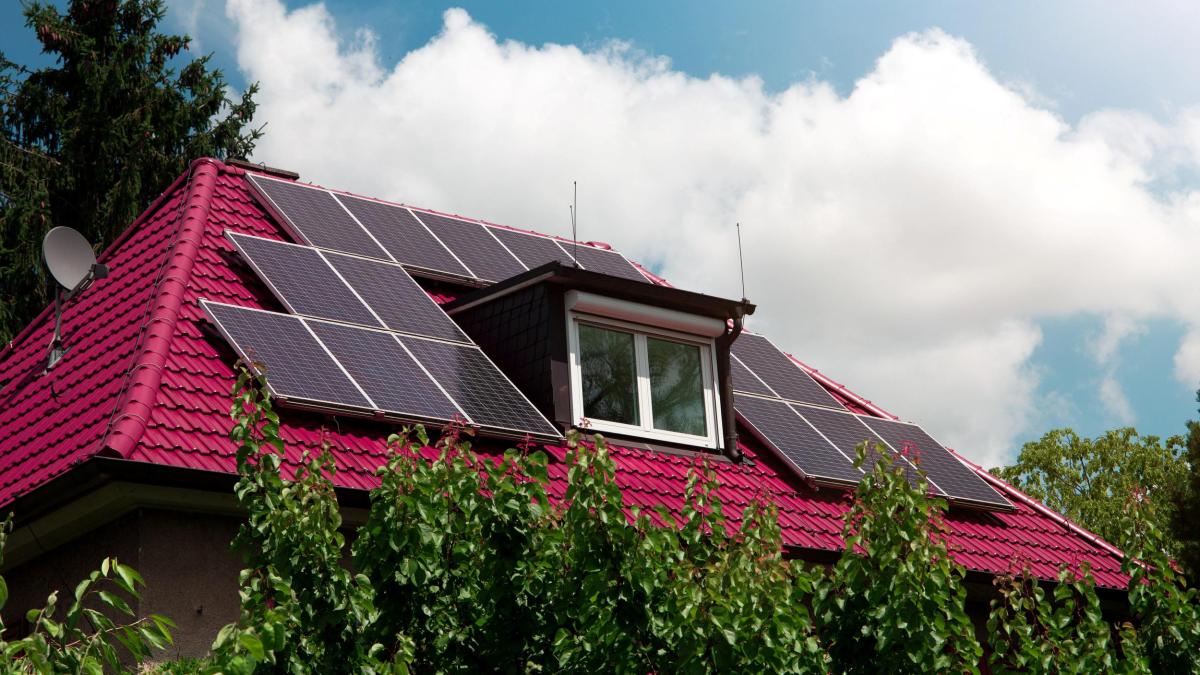
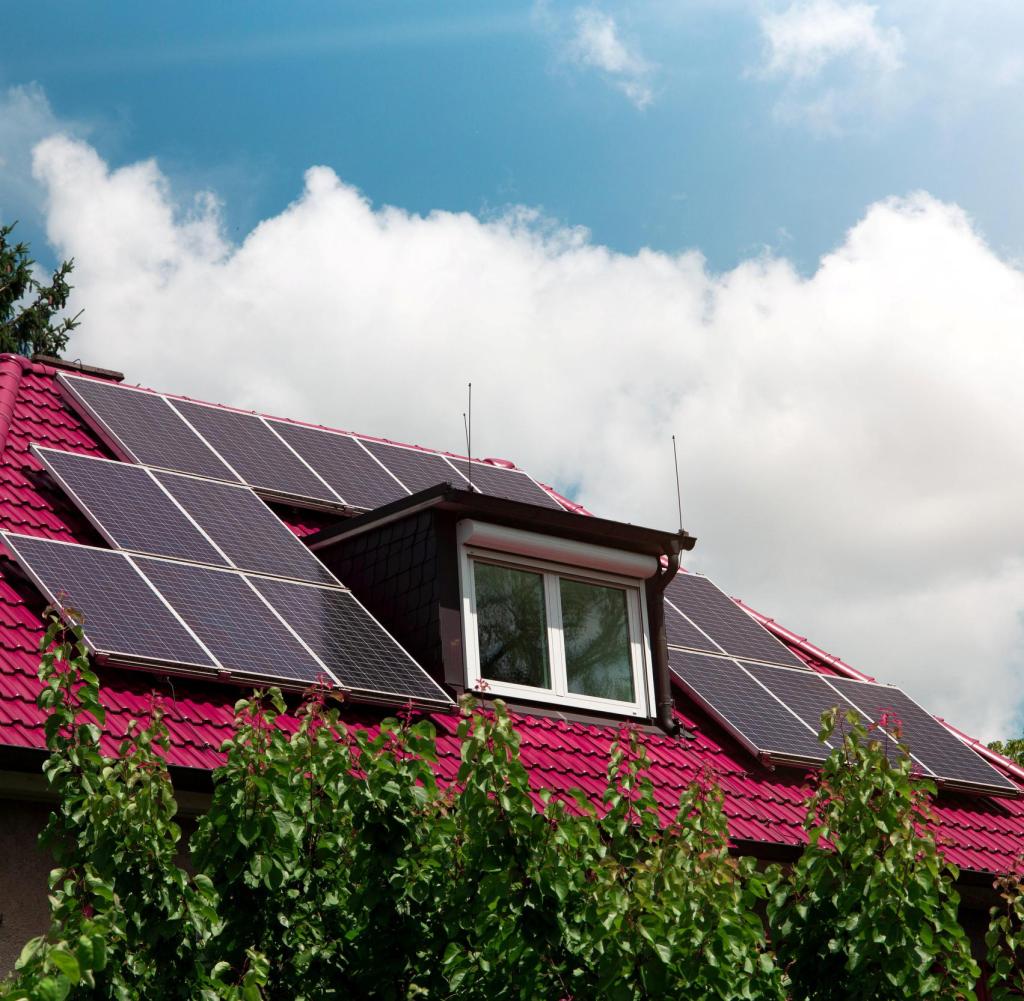
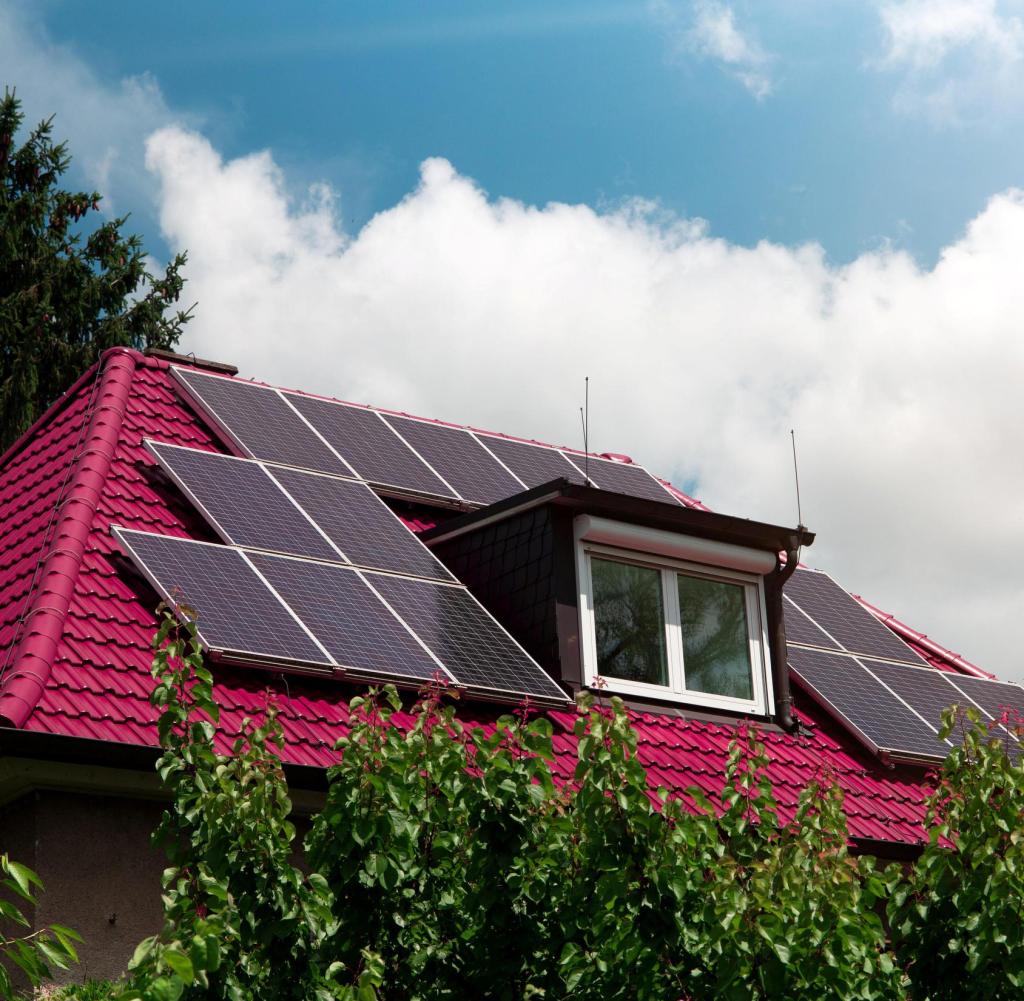
SAccording to a study, solar cells on roof surfaces could cover the annual global electricity demand. This is what a research team reports after investigating the potential of solar modules on roofs Journal “Nature Communications”. According to this, the roof areas of all continents cover about 200,000 square kilometers, compared to about 150 million square kilometers of land area.
Solar panels on roofs accounted for around a quarter of the global renewable energy capacity increase in 2018 – that year the capacity was 213 gigawatts (billion watts), according to the researchers. To estimate the global potential of this form of energy production, James Glynn of University College Cork, Ireland, and colleagues combined two approaches that have previously been used to make estimates.
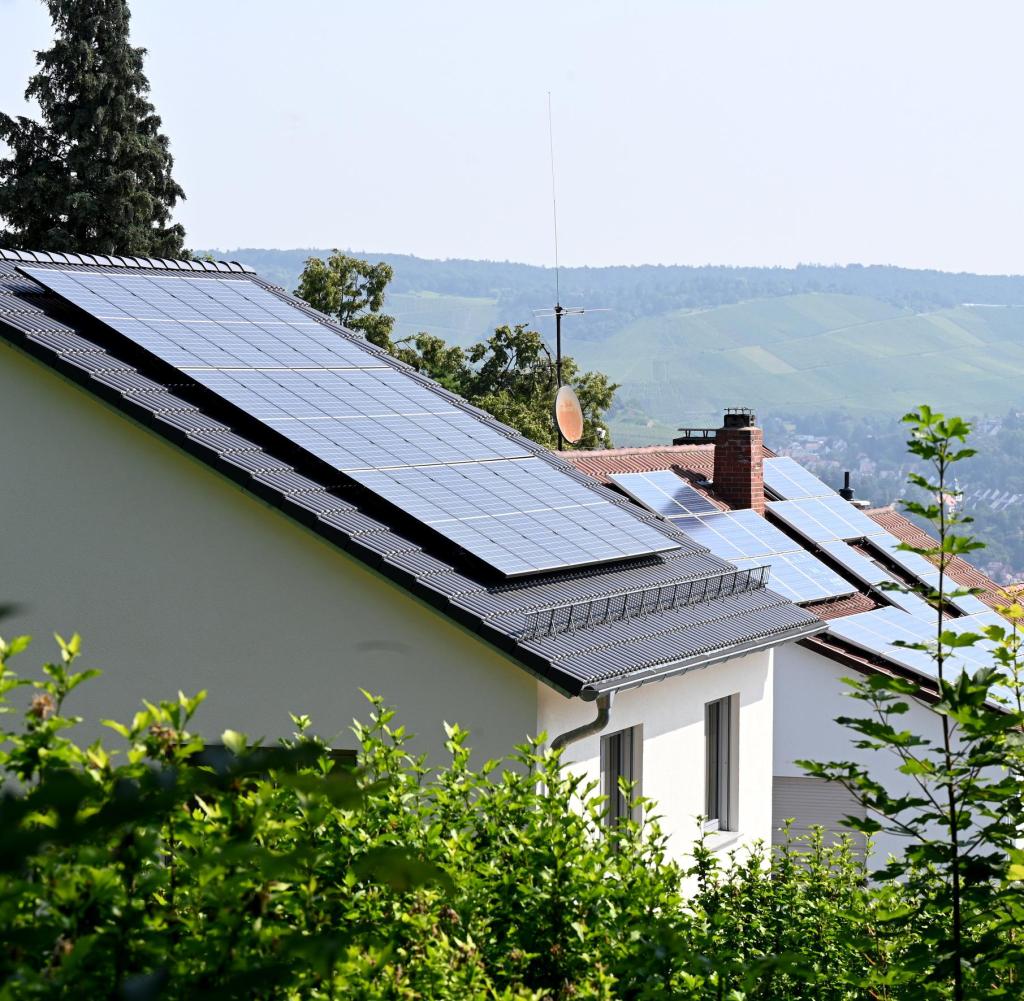
In Baden-Württemberg, homeowners will have to install a solar system on the roof from May 2022
Source: picture alliance/dpa
One approach collects house floor plan data in a manageable area and then extrapolates it to larger regions.
In the other approach, aerial and satellite images are examined using machine learning algorithms on roof surfaces.
The researchers divided the entire investigated land area into about 3.5 million squares, each ten kilometers long. “In each assessment unit, we use a high-resolution population dataset (at 100-meter spatial resolution), street lengths, and built-up area boundaries to estimate roof area,” they write. With the help of machine learning, the computer model determines the connections between this and other data.
Because solar radiation varies according to latitude, the researchers included a conversion factor in their calculations. While the potential usable energy is similar year-round in West Africa due to solar radiation, it can vary between 94 and 255 billion kilowatt-hours per month in Western Europe.
Glynn’s team also calculated the costs per 1000 kilowatt hours: in India it is 66 US dollars (about 57 euros), in China 68 dollars (almost 59 euros) and in the USA on the other hand 238 dollars (205 euros). Germany lies in between with 153 dollars (132 euros).
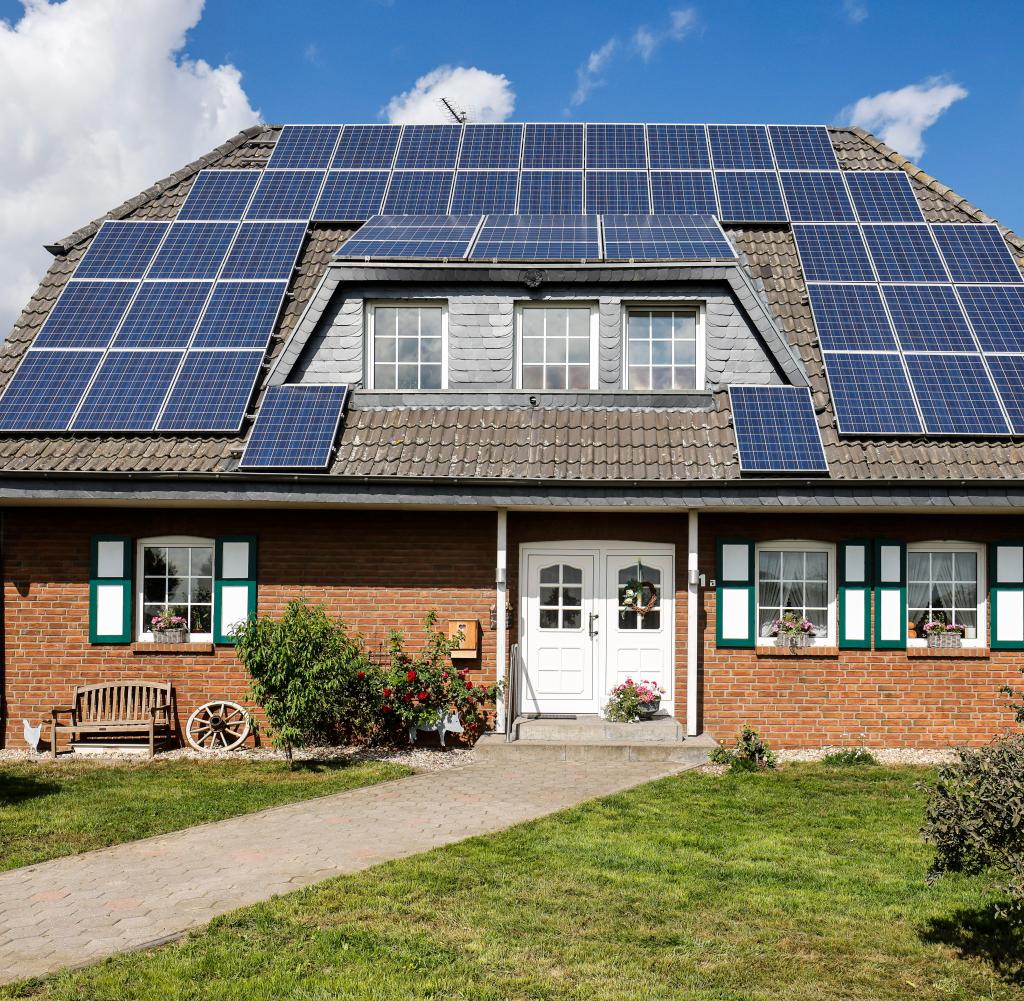 photovoltaic solar cells on the roof.”/>
 Overall, the scientists arrived at an energy value of 27 trillion kilowatt hours that solar cells on roofs could supply. For comparison: The International Energy Agency (IEA) estimates global electricity consumption for 2018 at 24.7 trillion kilowatt hours.
In order to exploit the potential of solar modules, the global introduction of new market mechanisms in competitive power generation markets is necessary, write the scientists working with Glynn. “With prices for electricity storage technologies falling and grids intelligently managed, rooftop solar technology will play a critical role in these markets by taking on generation, storage and system balancing functions.”